
Looking for the Best Franchises to Own? 5 Red Flags to Watch for in an FDD
by Johnny Tellez | Jun 5, 2026

You’ve found the brand. You love the product. You can already see yourself wearing the branded polo shirt and walking into your very own location. The excitement is real, and it should be, business ownership is one of the most rewarding paths you can take. It’s the promise of autonomy, the chance to build an asset, and the opportunity to impact your local community.
But at El Jefe Enterprises, we believe that business ownership should be evaluated through fit, not excitement alone. Excitement is what gets you to the table; clarity is what keeps you there. Before you commit your capital, your time, and your future to a brand, you have to step behind the curtain. You need to see the gears of the machine, not just the shiny paint job on the outside.
That curtain is the Franchise Disclosure Document (FDD).
Think of the FDD as the "prenup" of the business world. It is a legal document mandated by the FTC that contains 23 items outlining everything from the franchisor’s history to the bank account balance of the parent company. It isn’t just a pile of paperwork; it’s a blueprint of the partnership you’re about to enter. If you skip the fine print here, you aren't just taking a risk, you're flying blind.
El Jefe Tip: Read the FDD twice. Once with curiosity, then again with scrutiny. The first pass is to get familiar with the broad strokes. The second is to underline anything that makes your gut say, “Hmm.” At our franchise advisory, we always tell clients: the most important things in an FDD are often the things they don't want you to focus on.
As you go through your second pass, keep a sharp eye out for these five red flags.
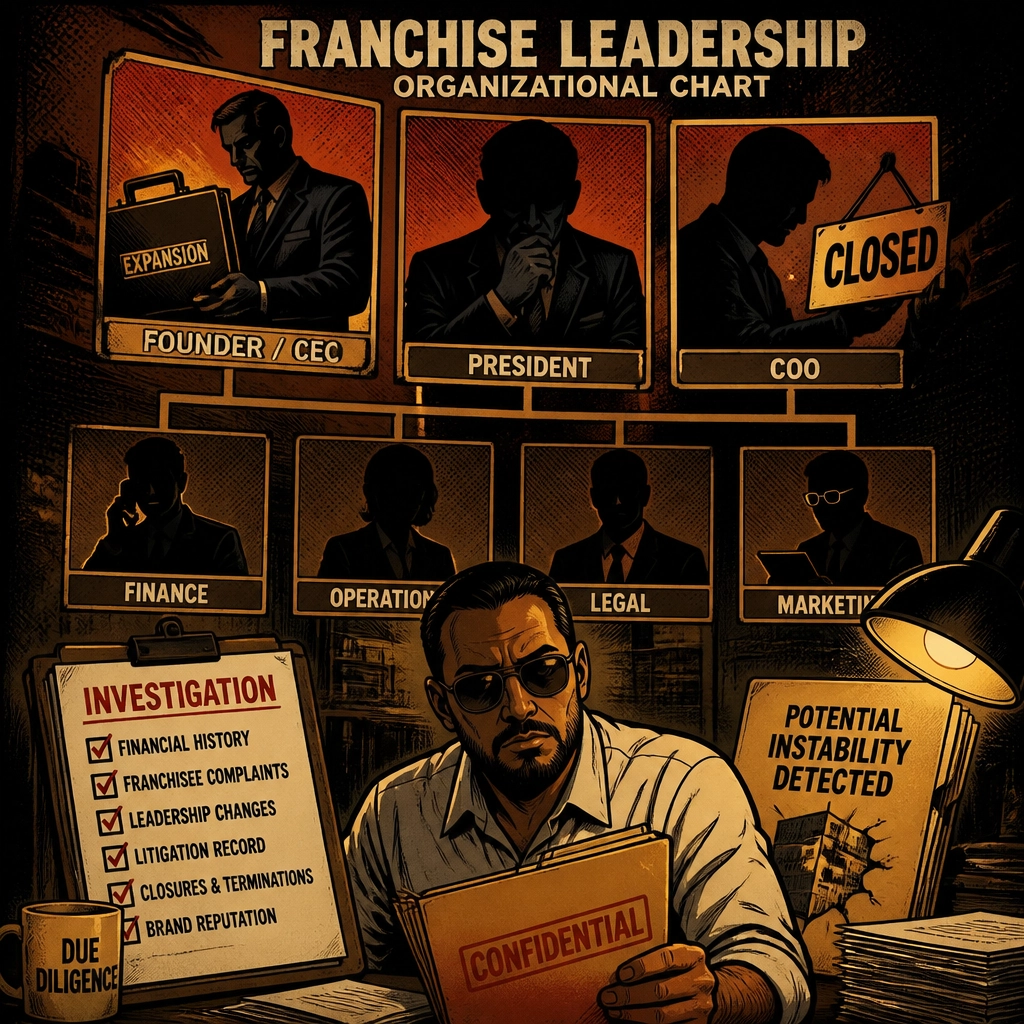
1. The Leadership Trap: Items 1-4
Who is actually flying the plane? Items 1 through 4 tell you the history of the company and, more importantly, the people running it. Many people assume that a big brand name means stable leadership, but that isn't always the case.
If you see a leadership team that has stayed together for a decade, that’s a great sign of stability and shared vision. But what if the executive team seems like a revolving door? Or worse, what if the founders have a history of launching "flash-in-the-pan" brands: selling a few hundred units, collecting the fees, and then watching them collapse while they move on to the next "big thing"?
The Red Flags:
- Litigation Heavy (Item 3): If the franchisor is constantly suing its own franchisees (or being sued by them), there is a fundamental breakdown in the system. Look for patterns of "misrepresentation" or "failure to support." A few lawsuits over 20 years might be normal for a massive brand, but a spike in recent years is a siren song for trouble.
- Bankruptcy History (Item 4): If the leadership team has a trail of bankruptcies in their wake, it suggests they may be better at selling "dreams" than managing sustainable business models. You want operators, not just promoters.
- No Operational Experience: This is a big one for us at El Jefe Enterprises. If the people in charge have never actually worked in the industry they are franchising, they won’t understand your day-to-day struggles. They’ll see your business as a spreadsheet, not a living, breathing operation.
2. The Hidden Costs: Items 5-7
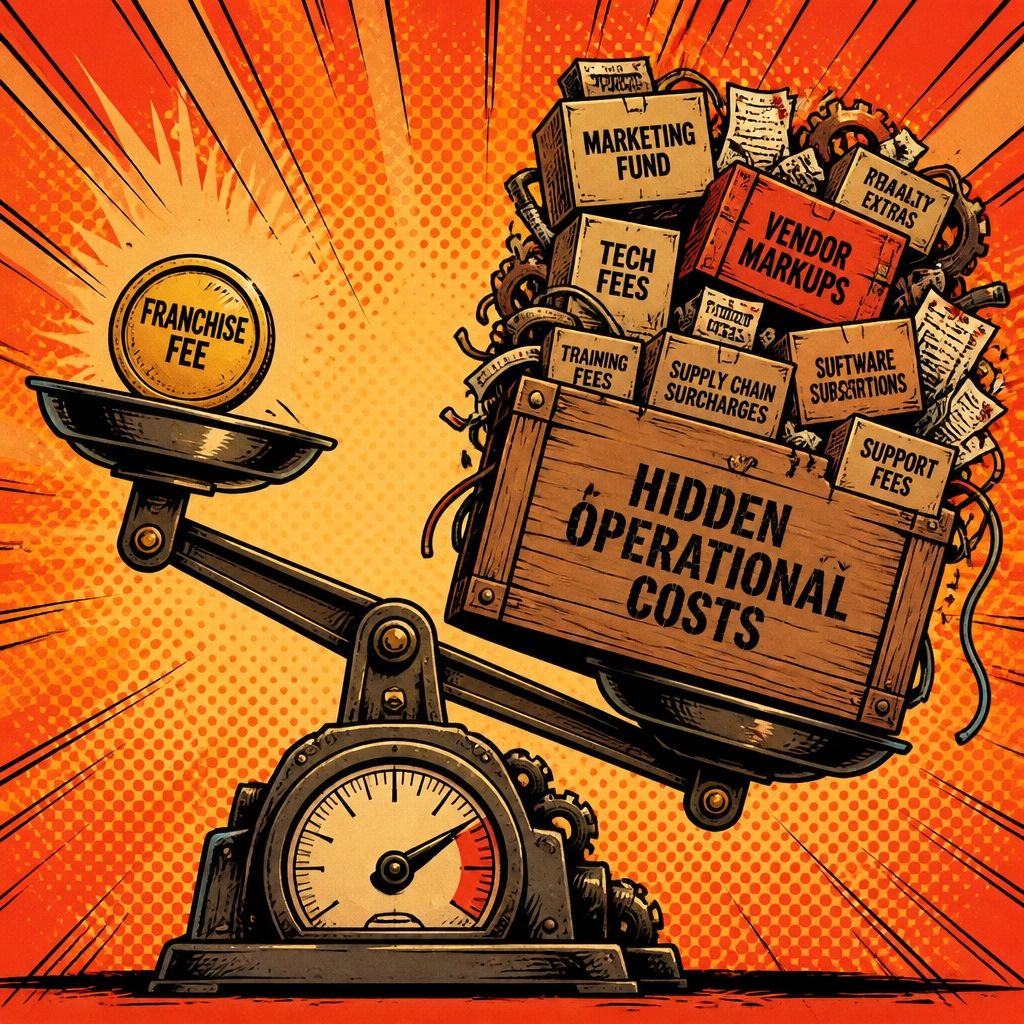
Everyone looks at the "Initial Franchise Fee," but that is just the cover charge to get into the club. The real story is in Item 7: the Estimated Initial Investment. This is where the franchisor outlines what it really costs to get the doors open and the lights on.
At El Jefe Enterprises, we often see candidates get caught off guard by the "Working Capital" line item. Many franchisors only estimate enough working capital to cover the first three months of operation. In the real world, a business might take six, nine, or even twelve months to reach a break-even point. If you run out of cash before you reach that point, the best business model in the world won't save you.
The Red Flags:
- Vague Investment Ranges: If the range between the "low" and "high" investment is massive (e.g., $250k to $1.2M) with no clear explanation, you aren't looking at a plan: you're looking at a guess. You need to know why that delta exists. Is it real estate? Equipment? Geography?
- Mandatory Vendor Markups: Check Item 8 as well. If you are forced to buy supplies only from the franchisor or their approved affiliates at prices significantly higher than the open market, your margins will be squeezed before you even open your doors. This turns the franchisor into a wholesaler, which can create a conflict of interest.
- The "Junk" Fee Pile-up: Technology fees, audit fees, renewal fees, and "brand fund" surcharges. If the "Other Fees" in Item 6 look like a mile-long CVS receipt, the franchisor might be more interested in nickel-and-diming you than helping you grow. Every dollar they take in "administrative fees" is a dollar out of your bottom line.
3. The Missing Item 19 (The Earnings "Maybe")
Item 19 is where the franchisor can disclose Financial Performance Representations, basically, what current owners are actually making. It is the most requested section of the FDD, and for good reason. You need to know if the numbers work.
While it isn't illegal for a franchisor to leave Item 19 blank, it should make you pause. If a brand has been around for five years and has 50 units, but they claim they "don't have the data" to show you what an average unit earns? That is a choice. Usually, it's a choice made to hide a lack of profitability across the system.
The Red Flags:
- Corporate-Only Data: If the earnings only reflect corporate-owned stores in prime locations, they aren't reflective of what a new franchisee will experience. Corporate stores often have "sweetheart" rent deals or shared labor costs that you won't have.
- Top 10% Only: If they only show the "Top Performers," they are showing you the exception, not the rule. You need the median, the averages, and the bottom tier to see the full picture of the risk you are taking.
- Verbal Promises: This is a non-negotiable. If a sales rep tells you "You'll make $500k in year one" but that number is nowhere in Item 19, run. If it isn't in writing in the FDD, it doesn't exist. In fact, if they make verbal claims not found in Item 19, they are violating FTC rules.
4. The Revolving Door: Item 20
This is arguably the most important section of the FDD for anyone looking at long-term stability. Item 20 lists the number of units that have opened, closed, been terminated, or been reacquired by the franchisor over the last three years. It also gives you the contact information for current and former franchisees.
Franchising isn't a shortcut; it's a framework. If that framework isn't working for a large number of people, you need to know why. High churn is the ultimate indicator of a system in distress.
The Red Flags:
- High Churn Rate: If a system is closing 15% or more of its units every year, there is a structural problem. It might be the marketing, the labor model, or the product itself: but something is broken.
- A "Flat" System: If they are selling 100 new franchises a year but only opening 10, there is a massive bottleneck in their support or real estate process. You don't want to pay a fee only to sit on the sidelines for two years.
- The "Buy-Back" Signal: If the franchisor is reacquiring a lot of units, it often means they are taking over failing locations to keep the "closed" numbers looking lower than they actually are. It's a way to "hide the bodies" of failed outlets.

5. The Franchisor’s Bank Account: Item 21
Is the franchisor profitable because their franchisees are successful, or are they only profitable because they keep selling new territories? This is a vital distinction. You want to partner with a company that grows with you, not off of you.
Item 21 contains the franchisor’s audited financial statements. You don't need to be a CPA to see the red flags here, though we always recommend having a professional look at them. You are looking for the financial health of your partner. If they go under, your brand equity goes with them.
The Red Flags:
- Reliance on Franchise Fees: If the majority of the company's revenue comes from "Initial Franchise Fees" (selling new units) rather than "Royalties" (the ongoing success of existing units), the company is a sales organization, not a support organization. When the sales stop, the support disappears.
- Heavy Debt: If the parent company is drowning in debt, they may be forced to cut support staff, reduce marketing spend, or stop innovating just to stay afloat. You want a partner with a strong balance sheet.
- Negative Equity: If the company's liabilities outweigh its assets, you are joining a ship that is already taking on water. This is common in very early-stage franchises, but in an established brand, it’s a massive warning sign.
Clarity Over Sales
At El Jefe Enterprises, our goal is to simplify the complexity of this process. We’ve seen both sides of the industry: we’ve run the operations, we’ve built the training systems, and we’ve helped people navigate the discovery process from start to finish. We don't believe in the "hard sell": we believe in the "hard look."
Validation is where discovery meets decision. The FDD is a tool designed to give you the upper hand, but only if you have the discipline to look past the marketing materials. If a franchisor gets defensive when you ask about these red flags, they’ve already given you the answer you need.
If you are currently looking at a brand and the paperwork is starting to feel overwhelming, or if you just want a second pair of eyes that has "been there, done that," let's talk. We provide highly personalized franchise advisory services that put your best interests first. Because at the end of the day, you aren't just buying a business. You're building a future.
The right next step is usually not more complexity. It is clearer structure.

Let’s talk about your next move
No pressure and no obligation. The goal of the first conversation is simple: clarity.
Book a callRelated reading

Is a Franchise Consultant Really Free? How It Works in Atlanta
by Johnny Tellez | Oct 26, 2026
Short answer: yes. A good franchise consultant costs you nothing. That's usually the moment people get suspicious. Fair enough. If you're thinking about buying a franchise in Atlanta, you should know exactly who's paying, why, and what that means for the advice you get…
Read more
Business Coaching in Atlanta: 7 Signs Your Small Business Is Ready for a Coach
by Johnny Tellez | Oct 26, 2026
Atlanta is one of the best places in the country to own a small business. From Buckhead to Decatur, from Marietta to the Westside, owners are opening shops, service companies and franchises every week. But building something and running it well are two different jobs. A lot of good owners hit a point where hard work alone stops…
Read more
Is Your Business Stuck? Here’s How the Five Pillars of Operational Clarity Diagnose the Real Problem
by Johnny Tellez | Oct 1, 2026
Most business owners don’t realize they are stuck until they are exhausted. You started with a vision. You had the energy. But somewhere between opening the doors and reaching your first major milestone, the "grind" became the "norm." You find yourself putting out the same fires every Tuesday, answering the same questions from your team…
Read more