SOP: Kitchen Workflow Optimization & Equipment Upgrade Protocol
by Johnny Tellez | Aug 31, 2026
In many kitchens, the default setting is "survival mode." It’s that feeling of constant firefighting: reacting to the next ticket, the next broken equipment, or the next staff call-out. But survival mode is a ceiling. It keeps you small, it keeps your team stressed, and it prevents the business from ever finding a rhythm that allows for real growth.
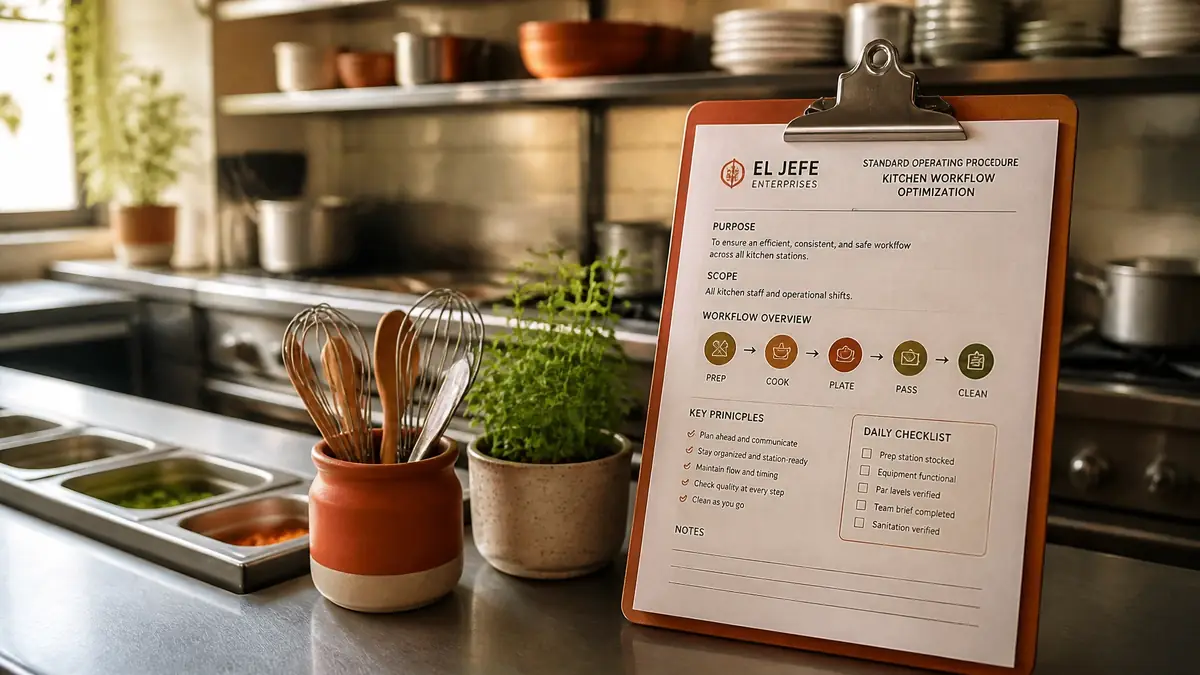
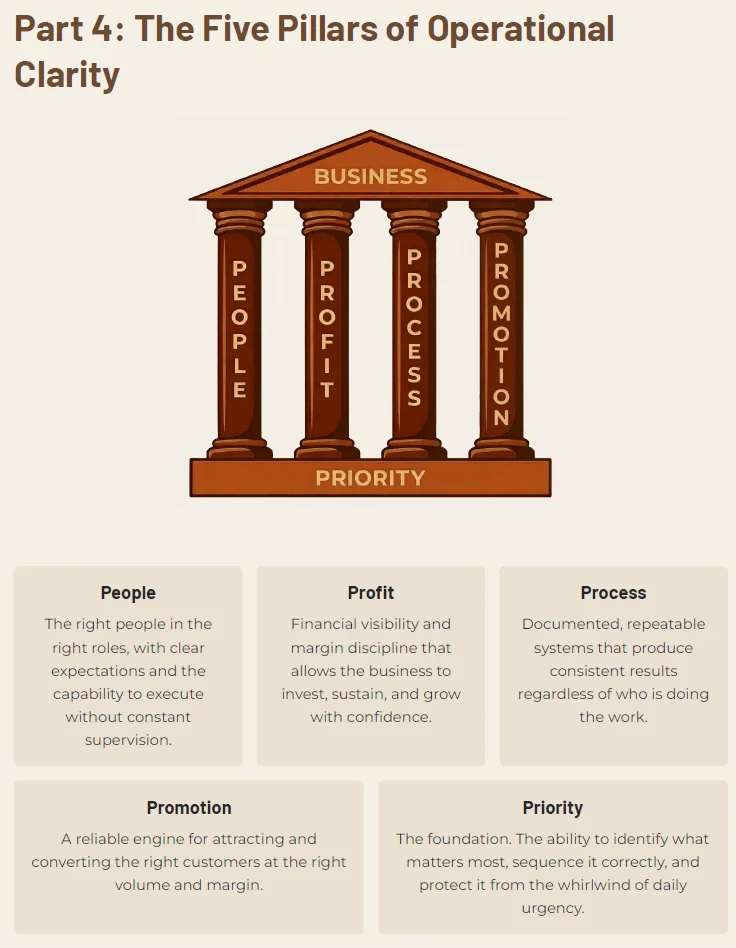
At El Jefe Enterprises, we believe that operational excellence isn't about working harder; it’s about building better scaffolding. This Standard Operating Procedure (SOP) is designed to move your team from a reactive "hustle" to a proactive "ownership mindset." It’s part of our Process pillar, designed to turn founder knowledge into repeatable, scalable systems.
1. The Philosophy: Standards as 'Invisible Scaffolding'
Most owners look at SOPs as restrictive rules. We look at them as invisible scaffolding.
Think about a building under construction. The scaffolding isn't the building itself, but without it, you can't reach the higher levels safely. Standards give your team the freedom to stop thinking about how to do the basic tasks so they can focus on how to take care of the customer.
The deeper shift is moving from Survival Mode to an Ownership Mindset. Survival mode sounds like this: "We're short again," "the oven is acting up," or "I have to jump on the line because nobody else can handle it." That may get you through the day, but it will not build a business that can grow. An ownership mindset means designing the kitchen so the system works even when the owner is not acting as the lead cook. If the business only runs when you are on the line, you have not built a system yet. You have built yourself a job.
When you have clear, documented standards, you move from "firefighting" (telling people what to do in the moment) to "coaching" (guiding people toward a standard they already know). If a station is falling behind, you don't just jump in and save the shift yourself; you look at the scaffolding. Is the prep done? Is the workflow crossing? Is the equipment failing? Is the role clear enough for someone else to execute it well?
The Goal: Build a kitchen that runs on structure, training, and visibility so the owner can lead the business, not just rescue the shift.
2. Workflow Optimization: Identifying Constraints
A kitchen is a manufacturing plant that operates in real-time. If the flow is broken, everything else feels harder than it needs to be. We optimize workflow by identifying constraints: the specific points where the "water" (orders) stops flowing smoothly.
Non-Negotiable Pre-Shift Alignment
The shift doesn't start when the first ticket prints. It starts 30 minutes prior. Every shift must begin with a "Line Check & Alignment" session:
- Station Readiness: Does every cook have 100% of their mise en place?
- The "One Thing": What is the one goal for this shift? (e.g., "Ticket times under 12 minutes" or "Zero remakes on the grill station").
- Equipment Status: Are all pilots lit? Are all low-boys at temp?
Identifying Bottlenecks Before They Are Symptoms
A bottleneck is not just "it's busy." It’s a specific station or piece of equipment that limits the throughput of the entire kitchen.
- Observe the Flow: Look for "cross-traffic." If your salad prep has to walk across the grill line to get to the walk-in, that’s a constraint.
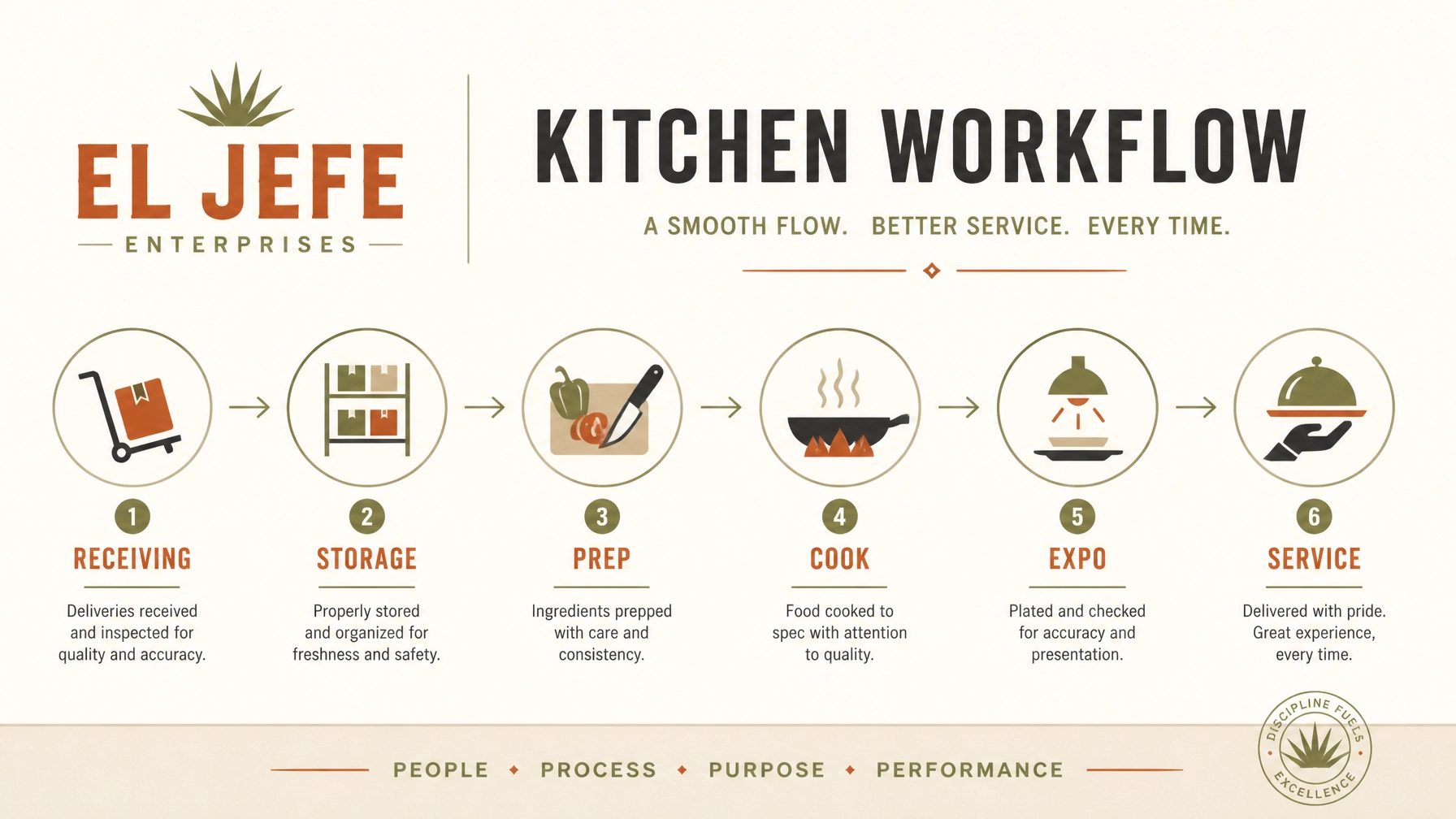
- Linear Pathing: The gold standard is a straight line: Receiving → Storage → Prep → Cook → Expo → Service. Any time a path doubles back on itself, you lose time and increase the risk of collisions.
Measurable Behaviors
We don't just ask for "better prep." We set observable behaviors:
- Prep Rule: "No prep happens during service hours unless it’s an emergency."
- Cleanliness Rule: "Clean as you go is not a suggestion; it’s a station requirement."
3. Equipment Upgrade Protocol: Assessing Space & ROI
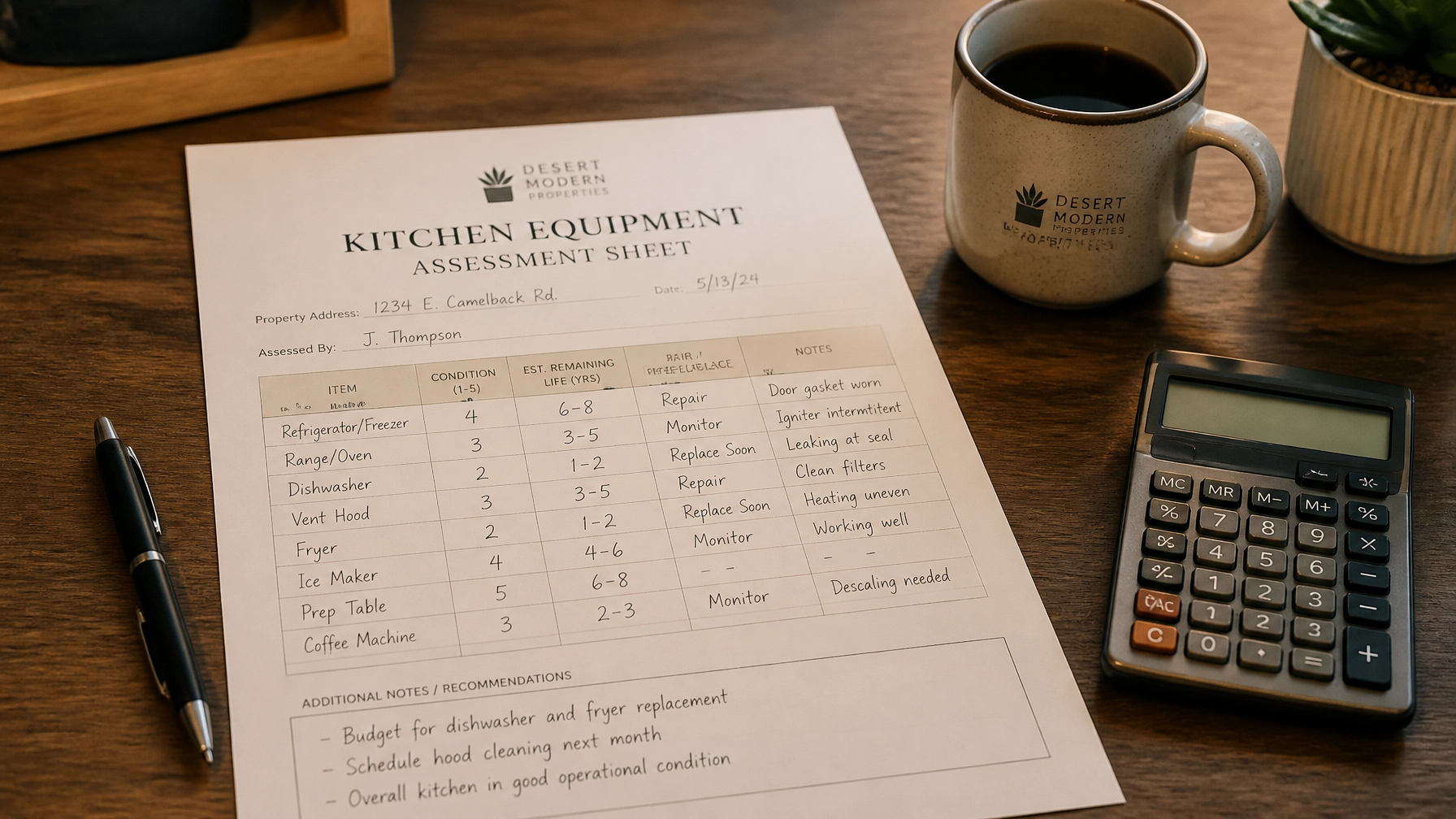
Too often, owners buy a new piece of equipment because they are frustrated, not because they’ve done the math. At El Jefe Enterprises, we treat every equipment purchase as an investment that must pay for itself in labor savings, margin improvement, or increased capacity.
The Assessment Protocol
Before you buy, ask these four questions:
- Capacity vs. Utilization: Is the current equipment running at 100% capacity during peak? If your fryer is always full and people are waiting, you have a capacity problem. If it’s only full for 10 minutes a day, you have a scheduling problem.
- Space Performance: Does this piece of equipment earn its square footage? If a bulky oven only cooks one low-volume menu item, it’s a liability.
- Labor Impact: Will this upgrade save steps? A refrigerated prep table that keeps ingredients at eye level can save a cook 200 steps a shift. Multiply that by 365 days, and the equipment pays for itself in reduced labor fatigue and speed.
- Utility & Maintenance: Does the upgrade require a new gas line or higher voltage? Consider the total cost of ownership (TCO), not just the sticker price.
Prime Bottleneck Example: The Baker's Pride Small Deck Oven
A small Baker's Pride deck oven is a good example of how one piece of equipment can quietly cap the entire business. It may work when the menu is smaller and volume is manageable, but once demand increases, that oven can become the choke point for production, timing, and menu flexibility. If the oven is constantly backed up, product quality starts to vary, ticket times drift, and the owner or strongest cook usually becomes the person manually managing the bottleneck all shift long.
That is exactly why equipment decisions should be tied to workflow, throughput, and growth plans rather than frustration alone.
Protocol for Moving Toward a Convection Oven
If the goal is to support roasts, catering volume, and more flexible batch production, the next step is not just "buy a bigger oven." The next step is a structured transition:
- Document Current Limits: Track where the Baker's Pride oven is slowing service, prep, or catering execution. Note peak-hour delays, menu items affected, and labor workarounds.
- Define the Future Use Case: Confirm what the convection oven must handle: roasts, batch prep, catering support, reheats, and production consistency.
- Map Space and Utilities First: Verify placement, ventilation, power or gas requirements, and how the new oven changes movement between prep, cook, and finishing.
- Run a Menu Impact Review: Identify which items shift into the convection workflow and which items remain in the deck-oven workflow during transition.
- Train Before Launch: Create a simple operating guide for temperature ranges, cook times, holding standards, and cleaning routines before the equipment goes live.
- Install Without Disrupting Service: Use the same "midnight swap" mindset so installation, calibration, and first-use training happen outside active production hours.
Roadmap for an 18-Foot Frozen Production Line
If the bigger vision includes an 18-foot frozen production line, that should be treated as a phased operational buildout, not a single purchase decision. The roadmap should look like this:
- Stabilize the Current Kitchen: Fix the existing bottlenecks first so you are not layering new capacity on top of broken workflow.
- Standardize Recipes and Portioning: Frozen production only works when recipe consistency, yields, packaging, and labeling are already documented.
- Validate Volume Demand: Make sure catering, wholesale, or future channel demand justifies the line.
- Design the Line Flow: Build for a true sequence: prep → cook/roast → cool → portion → package → freeze → store.
- Define Labor Roles: Decide who owns each stage so the line does not depend on one experienced person carrying the whole process.
- Build the Supporting SOPs: Every stage of the frozen line should have documented standards for food safety, timing, storage, and handoff.
Steps for Upgrading Without Breaking the Flow
- The Pilot Phase: If possible, rent or trial a similar unit before committing.
- The "Midnight Swap": Never install major equipment during or right before a shift. Schedule it for after-hours to allow for calibration and staff orientation before the doors open.
- SOP Integration: Every new piece of equipment requires a 1-page "Quick Start & Cleaning" guide posted nearby.
4. The Scoreboard: Making Data Visible
If the team doesn't know the score, they are just "working." When they know the score, they are "competing" to win. An ownership mindset requires transparency.
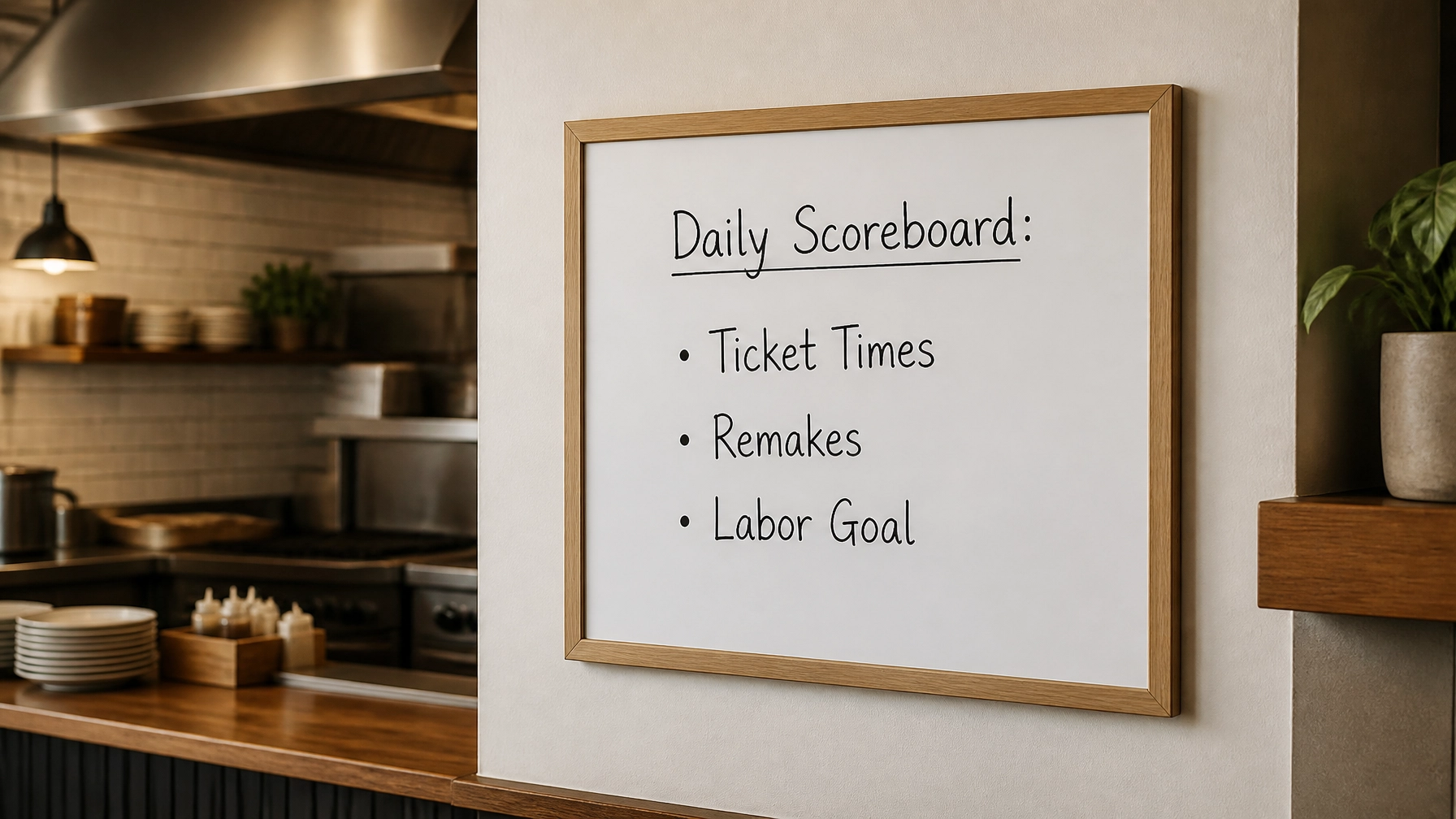
We recommend a physical or digital Scoreboard visible to the entire back-of-house (BOH) team. It should track three to four "Vital Signs" in real-time:
- Average Ticket Time (ATT): The heartbeat of the kitchen.
- % of Orders Over Target: This highlights the outliers and bottlenecks.
- Remake Count: A direct measure of quality and profit-bleed.
- Labor Goal: "We are currently at 14% labor (Goal: 15%). Great job staying focused."
When the team can see that they are "winning" the shift, morale increases. When they see they are "losing," the coaching conversation becomes about the data, not a personal attack on their effort.
5. The Ownership Loop: Observe → Train → Verify → Praise
Systems don't run themselves; people run systems. The Ownership Loop is how you maintain the invisible scaffolding we talked about earlier.
Observe
Spend 10 minutes every shift just watching. Don't talk, don't help, just watch the flow. Where is the friction? Who is struggling? Where is the "mess" starting?
The 'Invisible Scaffolding' Recording Protocol
One of the fastest ways to turn tribal knowledge into a real system is to record it. Use simple Zoom walkthroughs to document every recipe, prep sequence, station setup, and handoff step. The goal is not polished video production. The goal is capturing the work clearly enough that someone else can follow it without guessing.
This is invisible scaffolding in action. What used to live in the owner's memory or in one key employee's routine becomes a teachable reference point. Over time, those recordings can be turned into written SOPs, training checklists, and station guides. That is how informal knowledge becomes documented systems that anyone can follow.
Train
If you see a deviation from the standard, don't ignore it. Use the "Tell, Show, Do, Review" method. Training isn't a one-time event; it’s a constant refinement.
Verify
Trust but verify. Use checklists. Not because you don't trust your team, but because checklists prevent human error. A "Closing Checklist" is the best way to ensure the next shift starts in "Ownership Mode" rather than "Clean-up Mode."
Praise
This is the most neglected part of the loop. When you see someone following the linear workflow or catching a bottleneck before it happens, call it out. "I saw how you prepped ahead for that rush: that's ownership."
Moving Forward with Clarity
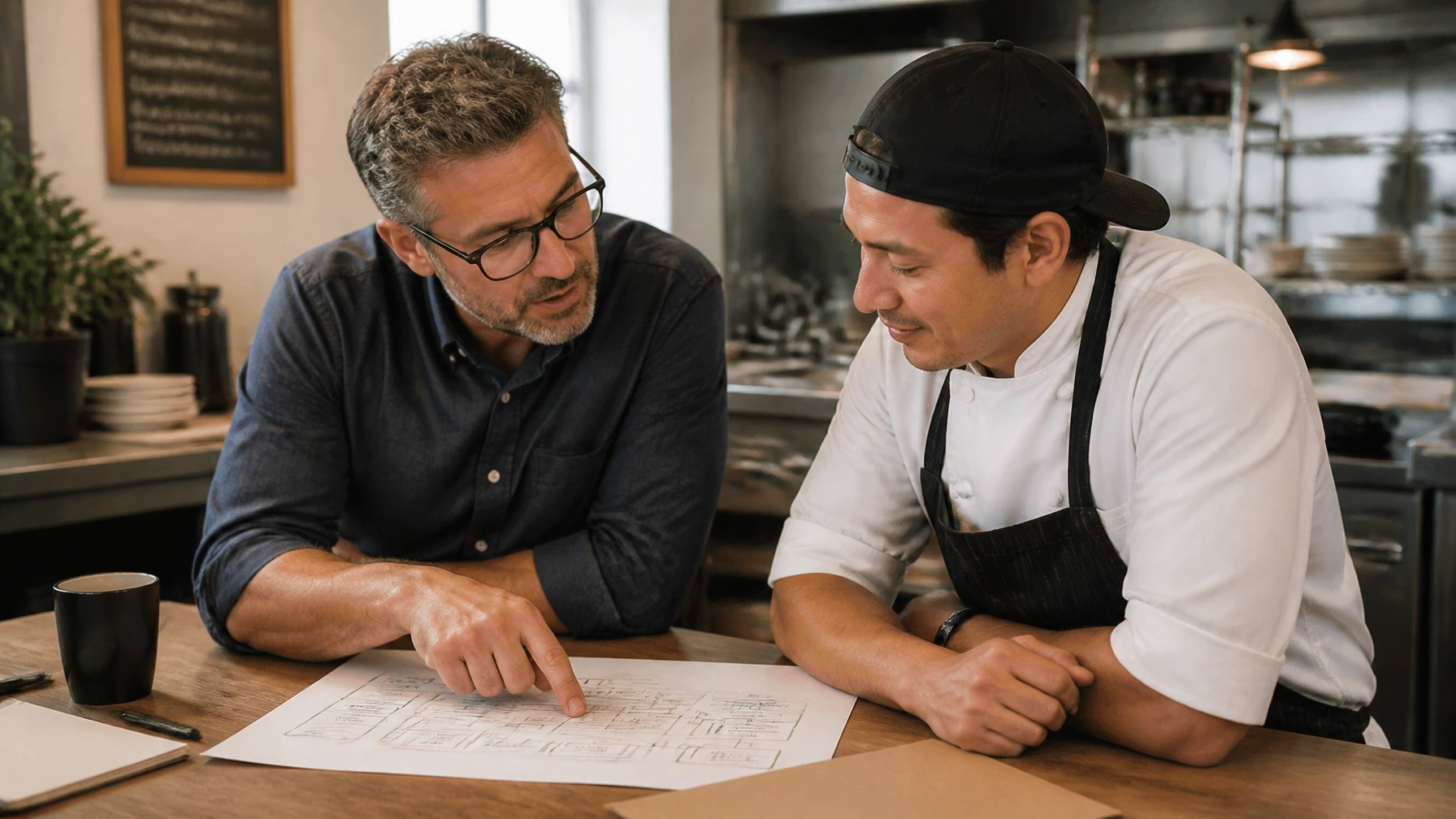
Optimizing a kitchen isn't a weekend project; it’s a commitment to a different way of operating. It’s about choosing clarity over chaos. When you implement this SOP, you aren't just making food faster: you are building a business that is easier to manage, more profitable to run, and far more rewarding to own.
If your business has outgrown the informal processes that got you started, it may be time to start documenting the systems that will take you to the next level.
At El Jefe Enterprises, we help owners simplify complexity so they can focus on growth, not just survival. Whether you are looking to franchise your current brand or just regain control of your current operations, the right next step is usually not more intensity: it’s clearer structure.
Let’s move from survival to ownership.
Let’s talk about your next move
No pressure and no obligation. The goal of the first conversation is simple: clarity.
Book a callRelated reading
Is a Franchise Consultant Really Free? How It Works in Atlanta
by Johnny Tellez | Oct 26, 2026
Short answer: yes. A good franchise consultant costs you nothing. That's usually the moment people get suspicious. Fair enough. If you're thinking about buying a franchise in Atlanta, you should know exactly who's paying, why, and what that means for the advice you get…
Read more
Business Coaching in Atlanta: 7 Signs Your Small Business Is Ready for a Coach
by Johnny Tellez | Oct 26, 2026
Atlanta is one of the best places in the country to own a small business. From Buckhead to Decatur, from Marietta to the Westside, owners are opening shops, service companies and franchises every week. But building something and running it well are two different jobs. A lot of good owners hit a point where hard work alone stops…
Read more
Is Your Business Stuck? Here’s How the Five Pillars of Operational Clarity Diagnose the Real Problem
by Johnny Tellez | Oct 1, 2026
Most business owners don’t realize they are stuck until they are exhausted. You started with a vision. You had the energy. But somewhere between opening the doors and reaching your first major milestone, the "grind" became the "norm." You find yourself putting out the same fires every Tuesday, answering the same questions from your team…
Read more