
Stop Asking “How Much Can I Make?” — Start Asking “How Is It Made”: A Five-Pillar Approach to Franchise Due Diligence
by Johnny Tellez | Sep 26, 2026

When most people begin their franchise discovery process, they head straight for Item 19 of the Franchise Disclosure Document (FDD). They want to see the numbers. They want to know the "Average Unit Volume" and the potential ROI. It’s a natural reflex, after all, you’re making a life-changing investment.
But in my 20-plus years leading operations for brands like Cici’s, Focus Brands, and Blaze Pizza, I’ve learned one hard truth: The spreadsheet is only the scoreboard. It doesn't show you the game.
Focusing only on "How much can I make?" is like looking at a photo of a marathon finish line and deciding you want to run one. It tells you nothing about the miles of training, the blisters, or the rhythm required to actually get there. To make a truly confident decision, you have to stop staring at the finish line and start asking: "How is it made?"
Effective franchise due diligence isn't just about verifying earnings; it’s about understanding the operational reality you are about to step into. To help our clients move forward with clarity, we use a framework I call The Five Pillars of Operational Clarity.
The Pivot from Projections to Practice
If you are looking at how to buy a franchise, you need a strategy that goes beyond the marketing materials. You need to know if the brand’s "engine" matches your driving style. Are you built for a high-volume QSR environment where every second counts, or a service-based model that requires high-touch relationship management?
Here is how to evaluate any opportunity through the lens of the Five Pillars.
1. People: The Lifeblood of the Unit

In franchise operations, you aren't just buying a brand; you are entering a people-management business. During your due diligence, you need to look past the corporate headshots and see what the "day-in-the-life" looks like for the team.
- The Depth Question: What is the labor model? Does the business require specialized talent (like licensed plumbers) or entry-level staff?
- The Culture Check: When you visit existing locations, do the employees look like they’ve been coached, or just commanded?
- The Turnover Reality: Ask existing franchisees about their turnover rates. If the model is a "revolving door," you will spend your life as an owner in a constant state of hiring and training rather than growing.
Johnny’s Insight: I’ve seen great brands fail because the owner didn't understand the "People" pillar. If you aren't prepared to be a coach, don't buy a business that requires a team of twenty.
2. Profit: Understanding the Levers
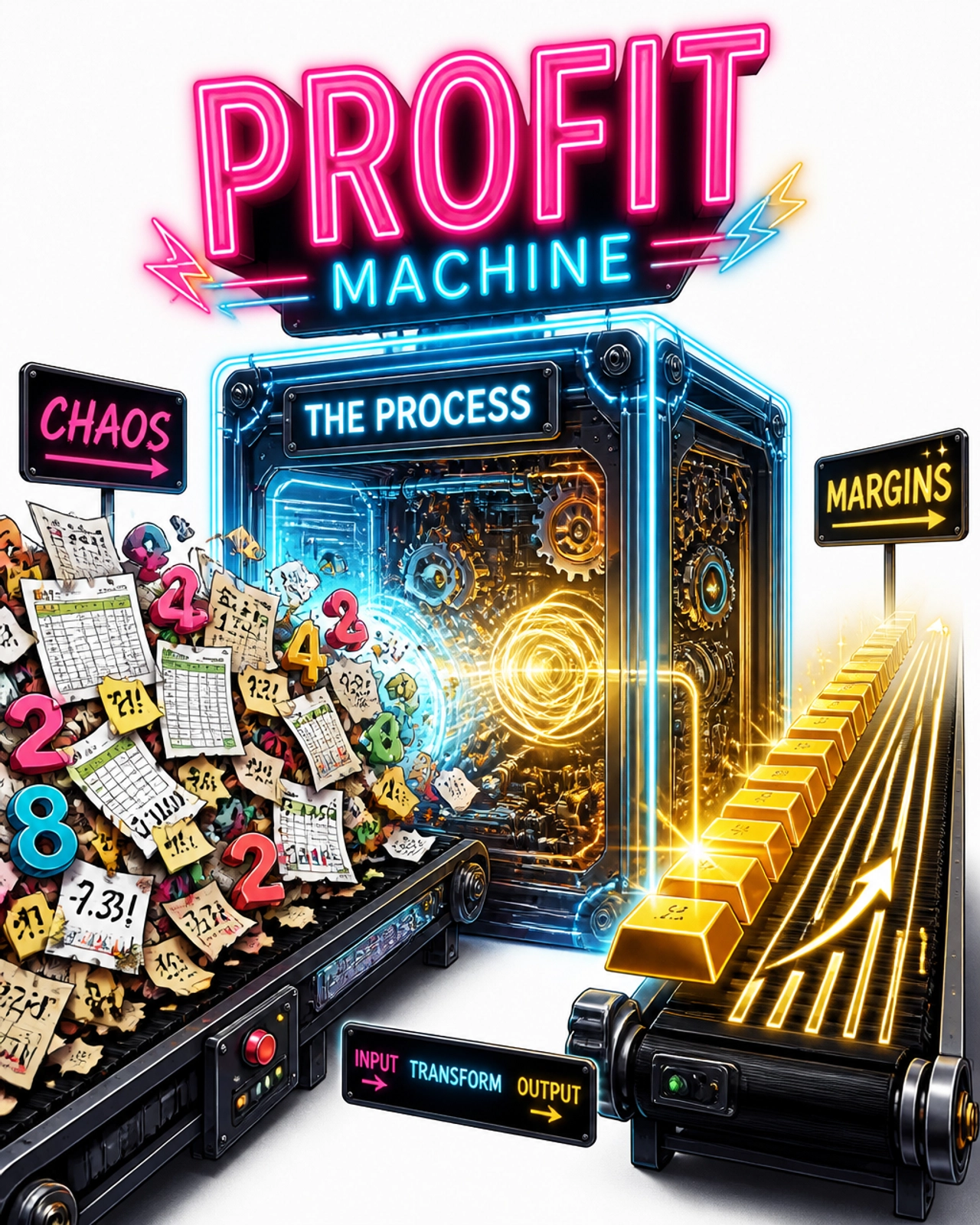
Profit is more than just "money left over." It is the result of managing specific levers effectively. During the franchise discovery process, your goal is to identify which levers are most sensitive.
- The Margin Trap: A high-revenue business with razor-thin margins is often more stressful than a lower-revenue business with healthy margins.
- Variable Costs: In the pizza world (Cici’s or Blaze), the cost of cheese or flour can swing your profitability. Does the franchisor have a supply chain strategy to hedge these costs?
- The Break-Even Point: Don't just look at when you'll be profitable. Look at how much capital you need to survive the "ramp-up" period.
At El Jefe Enterprises, we help candidates build "stress-test" projections, looking at the best, worst, and most realistic scenarios, so they aren't surprised by the reality of the P&L.
3. Process: The "Secret Sauce" is Documentation
A franchise is essentially a "business in a box," but if that box is full of messy, outdated manuals, you’re buying chaos.
- The Scalability Test: Could a manager run this store without you there for a week? If the answer is "no," the processes aren't strong enough.
- Consistency: Visit three different locations. Is the experience the same? If it’s not, the brand has a "Process" problem, which means you’ll be reinventing the wheel on your own dime.
- Technology: Is the tech stack helping the staff work faster, or is it a hurdle they have to jump over?
4. Promotion: How the World Finds You

Many people assume the brand name will do all the work. It won't. Franchise expert advice will tell you that local store marketing is where the battle is won.
- The Marketing Fund: You’ll likely pay 2–4% into a national fund. What does that actually buy you? Is it national TV spots that don't help your local suburb, or is it digital support that drives actual foot traffic?
- Customer Acquisition Cost: How much does it cost to "buy" a new customer in this industry?
- Reputation Management: Look at the Google reviews for 10 random units. Is the brand's reputation helping you or is it a headwind you'll have to fight?
5. Priority: Where Does Your Time Go?

This is the most overlooked pillar in any franchise ownership guide. You need to be honest about the role you want to play.
- Working In vs. On: Does this model require you to be behind the counter, or can you focus on the "Owner's Lab", the strategic side of the business?
- Rhythms of Accountability: Does the franchisor provide a "rhythm" for you to follow, or are you left to figure out your own weekly priorities?
- Sustainability: Can you do this for 10 years? If the "Priority" of the business is constant crisis management, you’ll burn out in two.
Moving Forward with Confidence
Franchise due diligence should not be a process of looking for reasons to say "yes." It should be a process of looking for the truth.
When you sit down with a franchise consultant or advisor, their job isn't to sell you on the dream. It’s to help you audit the reality. My time at Focus Brands and Blaze Pizza taught me that the "best franchises to own" aren't necessarily the ones with the flashiest marketing: they are the ones with the most structural clarity.
Before you sign that agreement, take the Five Pillars and go talk to existing franchisees. Don't ask them if they like the franchisor. Ask them:
- "How much time do you spend on the floor?"
- "What is your biggest operational bottleneck?"
- "If you had to do it again, what would you change about your People strategy?"
The El Jefe Partnership
At El Jefe Enterprises, we provide franchise advisory services that prioritize fit over sales pressure. We’ve been on the corporate side, the operations side, and the coaching side. We know what a "healthy" unit looks like from the inside out.
If you’re ready to stop guessing and start building with structure, let’s talk. The right next step isn't more complexity; it's clearer structure.
Move forward with clear, confident decisions.
Let’s talk about your next move
No pressure and no obligation. The goal of the first conversation is simple: clarity.
Book a callRelated reading

Is Your Business Stuck? Here’s How the Five Pillars of Operational Clarity Diagnose the Real Problem
by Johnny Tellez | Oct 1, 2026
Most business owners don’t realize they are stuck until they are exhausted. You started with a vision. You had the energy. But somewhere between opening the doors and reaching your first major milestone, the "grind" became the "norm." You find yourself putting out the same fires every Tuesday, answering the same questions from your team…
Read more
The Priority Problem: Why Most Business Owners Stay Busy Instead of Effective
by Johnny Tellez | Sep 29, 2026
In more than 20 years of leading operations for brands like Cici’s, Focus Brands, and Blaze Pizza, I’ve seen one phenomenon play out more than any other. It doesn’t matter if it’s a single-unit restaurant or a massive franchise system: owners and operators are often the hardest-working people in the room, yet they frequently feel…
Read more
Becoming the Boss Isn’t Just Owning the Business: What Changes When You Start Leading It
by Johnny Tellez | Sep 24, 2026
Owning a business gives you authority. Leading it gives you direction, capacity, and options. That distinction matters because many owners become the legal boss long before they feel like the leader of the business. They may make every decision, solve every problem, answer every question, and carry the responsibility. But if the business still depends…
Read more