
The Accountability Gap: Why Most Business Owners Overestimate Their Systems (And How to Close It)
by Johnny Tellez | Jul 28, 2026
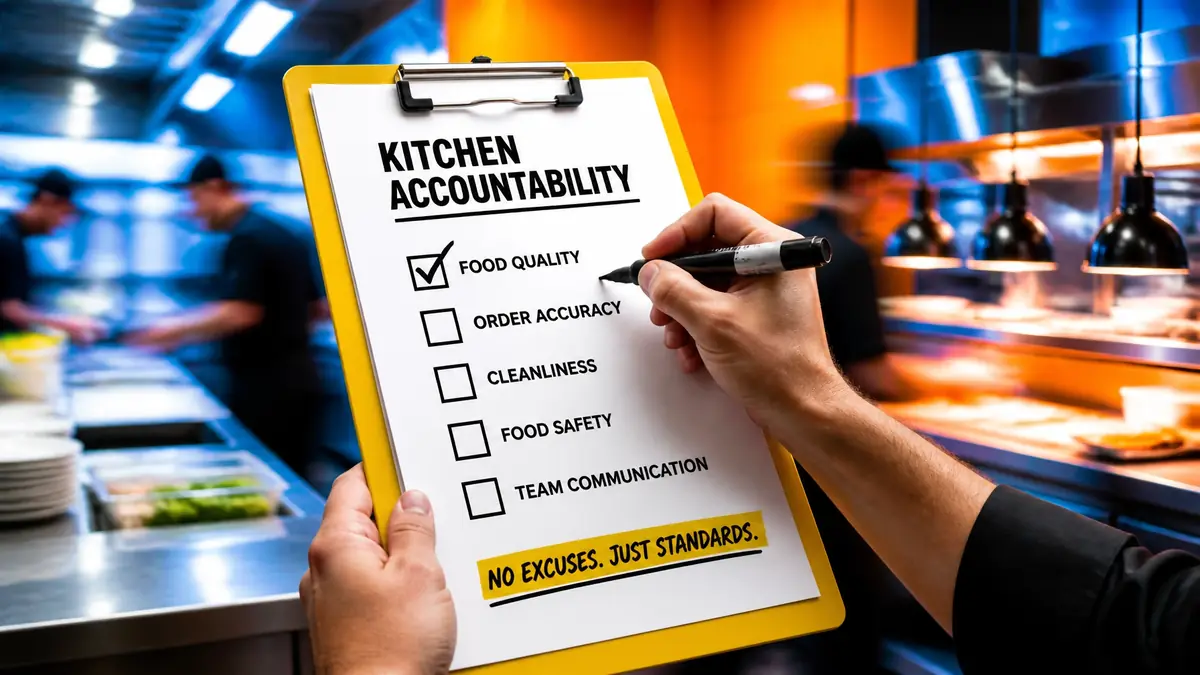
Many business owners believe they have a "systemized" business because they have a shelf full of three-ring binders or a digital folder overflowing with Standard Operating Procedures (SOPs). They feel a sense of security knowing that every process: from opening the doors to closing the registers: is documented.
But here is a reality I’ve seen across 20 years in multi-unit operations at brands like Cici’s, Focus Brands, and Blaze Pizza: Documentation is not execution.
A manual that no one follows is just a paperweight. A checklist that is "pencil-whipped" at the end of a shift is a lie. The space between what is written in your manuals and what is actually happening on the floor at 2:00 PM on a Tuesday is called the Accountability Gap.
For an entrepreneur looking to scale a small business, this gap is where profit leaks, customer loyalty dies, and owner burnout begins. If you are an aspiring franchise buyer, this gap is the difference between a brand that offers a "proven system" and one that actually supports its owners in running it.
The Illusion of Systemization
In the world of franchise operations, we often talk about the "Flywheel." The idea is that once the systems are in place, the business should run itself. But a flywheel only turns if there is consistent force applied to it. That force is accountability.
Most owners overestimate their systems because they mistake activity for results. They see their team "working hard," so they assume the systems are working. However, without a culture of accountability, the "Process" pillar of your business is just a suggestion.
I’ve sat in boardrooms and back offices where the SOP for inventory was flawless on paper. Yet, when we stepped into the walk-in cooler, the reality was chaotic. Why? Because the system was documented, but the outcome wasn't owned.
The Five Pillars of Operational Clarity
At El Jefe Enterprises, we look at business through the lens of the Five Pillars of Operational Clarity. To close the accountability gap, you have to understand how these pillars interact with the concept of ownership.
- People: This is where accountability begins. It’s not just about having bodies in the building; it’s about having the right people in the right roles with clear expectations. If "everyone" is responsible for a task, then no one is accountable for the outcome.
- Profit: Accountability has a direct line to your margins. When business systems fail: like portion control in a restaurant or lead follow-up in a service business: profit is the first thing to suffer.
- Process: This is the "How." It’s your SOPs and manuals. But remember: Process is the foundation, not the finish line.
- Promotion: You cannot effectively promote a business that is operationally broken. Scaling a small business through marketing only works if the operation can fulfill the promise you’re making to the customer.
- Priority: This is the most critical pillar for closing the gap. It’s about the ability to identify what matters most and protecting it from the "whirlwind" of daily chaos.

For the Aspiring Franchisee: Look Beyond the Manual
If you are currently evaluating a brand and seeking franchise advisory services, you need to change the way you look at a franchisor’s "systems."
During franchise due diligence, every franchisor will show you their beautiful training portal and their 400-page operations manual. Don't be blinded by the polish. Instead, ask these three questions:
- "How do you inspect what you expect?" Do they have a field support team that actually visits locations to validate standards, or do they just send an occasional email?
- "What happens when the standards aren't met?" Is there a clear path for coaching and correction, or is the system left to self-regulate?
- "What are the lead measures?" Good systems track the actions that lead to results, not just the results themselves.
A great franchise doesn't just give you a recipe; they give you a kitchen, a timer, and a chef who checks the seasoning.
For the Existing Business Owner: The "Dusty Manual" Syndrome
If you already own a business and feel like you’re constantly putting out fires, you likely have "Dusty Manual Syndrome." Your processes are documented, but they aren't part of the daily rhythm of the business.
The fix isn't more documentation. The fix is leadership development.
In my time leading operations at Blaze Pizza and Focus Brands, we didn't just tell managers to "be better." We gave them a rhythm. We turned the abstract idea of "accountability" into a visible, daily score.

How to Close the Gap: Three Practical Steps
Closing the accountability gap requires moving from "Responsibility" to "Ownership." Here is how you do it:
1. Assign One Accountable Owner Per Outcome
In many small businesses, ownership is vague. "We need to keep the lobby clean" is a responsibility. "Sarah is accountable for the lobby being at a '9/10' standard during the lunch rush" is ownership.
If there is a problem, you should know exactly who to go to: not to blame them, but to coach them. When you work with a business coach, this is often the first layer of "People" clarity we address.
2. Define "Done" (and Make it Visible)
The gap often exists because the owner’s definition of "good" is different from the employee’s definition. You must define success in observable, measurable terms.
- Vague: "Greet customers quickly."
- Clear: "Every customer is acknowledged with eye contact and a greeting within 3 seconds of walking through the door."
Once it’s defined, put it on a scoreboard. Great teams always know the score. If your team doesn't know if they are winning or losing at any given moment, they aren't being held accountable.
3. Establish a Rigorous Review Rhythm
Accountability dies in the dark. If you only check the "Process" once a month, you are essentially telling your team that the process doesn't matter.
You need a cadence: a heartbeat: for the business. This might be a 5-minute stand-up meeting before a shift or a weekly "Delta Review" where you look at what moved, what didn't, and why. These rhythms protect your Priority from the noise of the day.

The Goal is Clarity, Not Complexity
At El Jefe Enterprises, we believe that growth should not depend only on the owner’s memory, personality, or constant heroics.
Closing the accountability gap isn't about being a "tough boss" or micro-managing your team. It's about providing the structure that allows your people to win. When the systems are clear, the expectations are visible, and the follow-up is consistent, the business starts to gain its own momentum.
Whether you are looking to buy your first franchise or you’re an established owner trying to simplify the complexity of your operations, remember: The manual is just the map. Accountability is the actual journey.
The Takeaway:
Take one key process in your business this week: just one. Ask yourself: Who owns the outcome? How do we measure "done"? And when was the last time we actually inspected it? If you can't answer those three questions, you've found your gap. Now, go close it.
Let’s talk about your next move
No pressure and no obligation. The goal of the first conversation is simple: clarity.
Book a callRelated reading

Is a Franchise Consultant Really Free? How It Works in Atlanta
by Johnny Tellez | Oct 26, 2026
Short answer: yes. A good franchise consultant costs you nothing. That's usually the moment people get suspicious. Fair enough. If you're thinking about buying a franchise in Atlanta, you should know exactly who's paying, why, and what that means for the advice you get…
Read more
Business Coaching in Atlanta: 7 Signs Your Small Business Is Ready for a Coach
by Johnny Tellez | Oct 26, 2026
Atlanta is one of the best places in the country to own a small business. From Buckhead to Decatur, from Marietta to the Westside, owners are opening shops, service companies and franchises every week. But building something and running it well are two different jobs. A lot of good owners hit a point where hard work alone stops…
Read more
Is Your Business Stuck? Here’s How the Five Pillars of Operational Clarity Diagnose the Real Problem
by Johnny Tellez | Oct 1, 2026
Most business owners don’t realize they are stuck until they are exhausted. You started with a vision. You had the energy. But somewhere between opening the doors and reaching your first major milestone, the "grind" became the "norm." You find yourself putting out the same fires every Tuesday, answering the same questions from your team…
Read more