The Asset Builder’s Guide: Building Multi-Unit Equity While Keeping Your Career
by Johnny Tellez | Jun 5, 2026
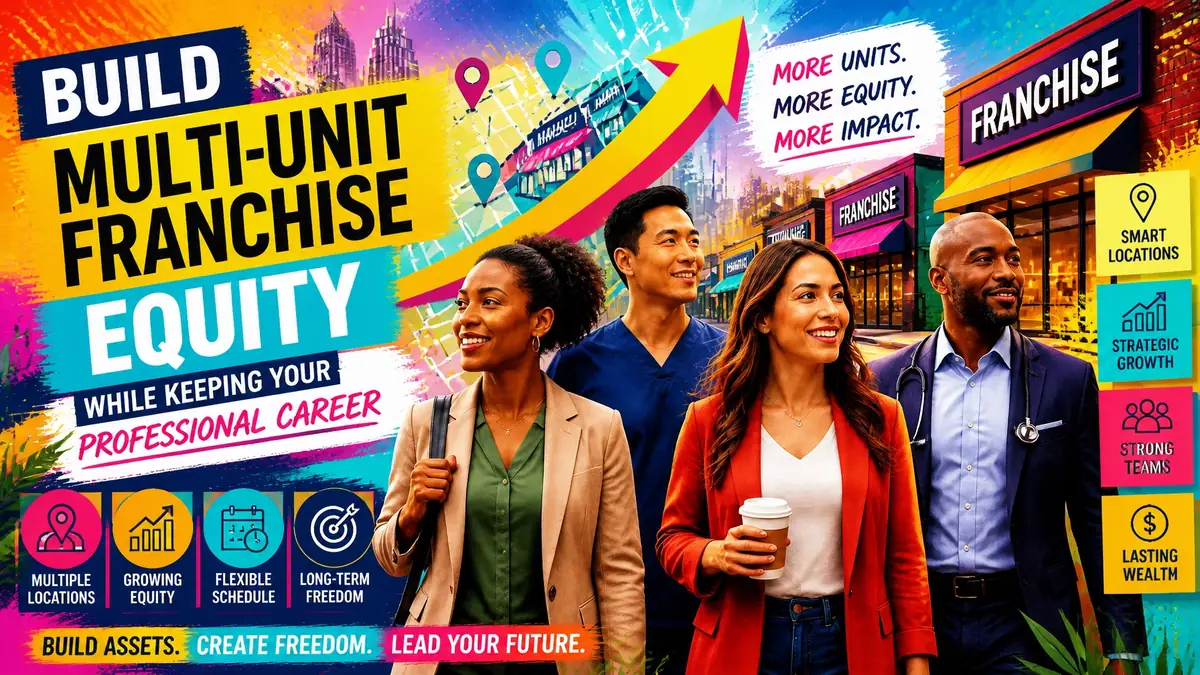
For many high-income professionals: the executives, physicians, and senior leaders who have spent decades climbing the corporate or clinical ladder: the idea of business ownership often feels like an "either-or" proposition. You either stay in your high-earning career and continue trading time for a paycheck, or you quit everything to dive into the unpredictable world of entrepreneurship.
But there is a third path. It is the path of the Asset Builder.
This approach isn't about buying a job or working 80 hours a week behind a counter. It is about leveraging your current income to build multi-unit equity through semi-absentee franchising. It is a small business growth strategy designed for those who value diversification and want to build lasting side wealth without walking away from their primary professional identity.
At El Jefe Enterprises, we focus on helping people move from "curiosity" to "clarity." We look past the marketing gloss to see if a model actually fits the life you are already living.
The Shift: From Income Earner to Asset Builder
Most corporate professionals are excellent at generating income, but they are often "asset-light." Their primary asset is their own specialized labor. If they stop working, the income stops flowing.
Franchising, when approached with a multi-unit mindset, shifts the focus from earning to owning. Instead of looking for a business that needs you to run the day-to-day, you look for a scalable model where you act as the strategist and investor.
The goal here is equity. You are building a portfolio of locations that produce recurring cash flow and, more importantly, a valuable enterprise that can be sold as a package in five to ten years.
Case Study: Dallas & Divyesh – Building a Multi-Unit Portfolio
Take the example of "Divyesh," a high-level executive in the Dallas-Fort Worth metroplex. Like many of our clients, Divyesh had spent years building a successful career but wanted to diversify his family’s wealth. He didn’t want to be a "solopreneur"; he wanted to be an entrepreneur with a portfolio.
Working with franchise advisory services, Divyesh evaluated several models through the lens of operational simplicity and management structure. The criteria were clear:
- It had to be semi-absentee (requiring 10–15 hours of his time per week).
- It had to have strong unit economics that supported hiring high-quality managers.
- It had to be scalable across the North Dallas corridor (Plano, Frisco, and Irving).

By focusing on a multi-unit agreement, Divyesh wasn't just opening one store; he was securing a territory. Within three years, he scaled to four locations. By sharing staff across his Dallas studios and centralizing his marketing, he achieved a level of "operational rhythm" that a single-unit owner rarely finds.
His day job remained his primary focus, but his "side" business was now a multi-million-dollar asset producing significant equity.
Why Models Like Stretch Zone Fit the Asset Builder
One of the brands frequently discussed in this space is Stretch Zone. It has become a popular choice for high-income professionals for several specific reasons:
- Service-Based Simplicity: There is no complex inventory or supply chain. The "product" is a practitioner-assisted stretch performed on a proprietary table.
- Membership Revenue: Like a gym, but more specialized, it relies on recurring membership dues. This creates predictable cash flow: the holy grail for an executive-turned-investor.
- Institutional Backing: With private equity support from firms like Princeton Equity Group, the brand is built for professionalized scale, not just "mom and pop" operations.
- The Manager-Run Model: About 93% of Stretch Zone owners are multi-unit operators. The model is intentionally designed for the owner to manage the metrics and the manager, not the customer.
When we help clients evaluate brands like this, we don't just look at the revenue. We look at the "effort-to-equity" ratio. If a business requires you to be on-site every Saturday to succeed, it’s not an asset: it’s a second job.
A Small Business Growth Strategy for Executives
Building a multi-unit portfolio requires a different mental toolkit than running a single location. To succeed while keeping your career, you have to follow a structured roadmap:
1. Build the "Management Layer" Early
In a semi-absentee model, your most important hire isn't the technician; it's the General Manager. High-income professionals succeed because they know how to lead leaders. Your role is to provide the vision, the capital, and the accountability, while your manager handles the "crust" of daily operations.
2. Leverage Systems, Not Heroics
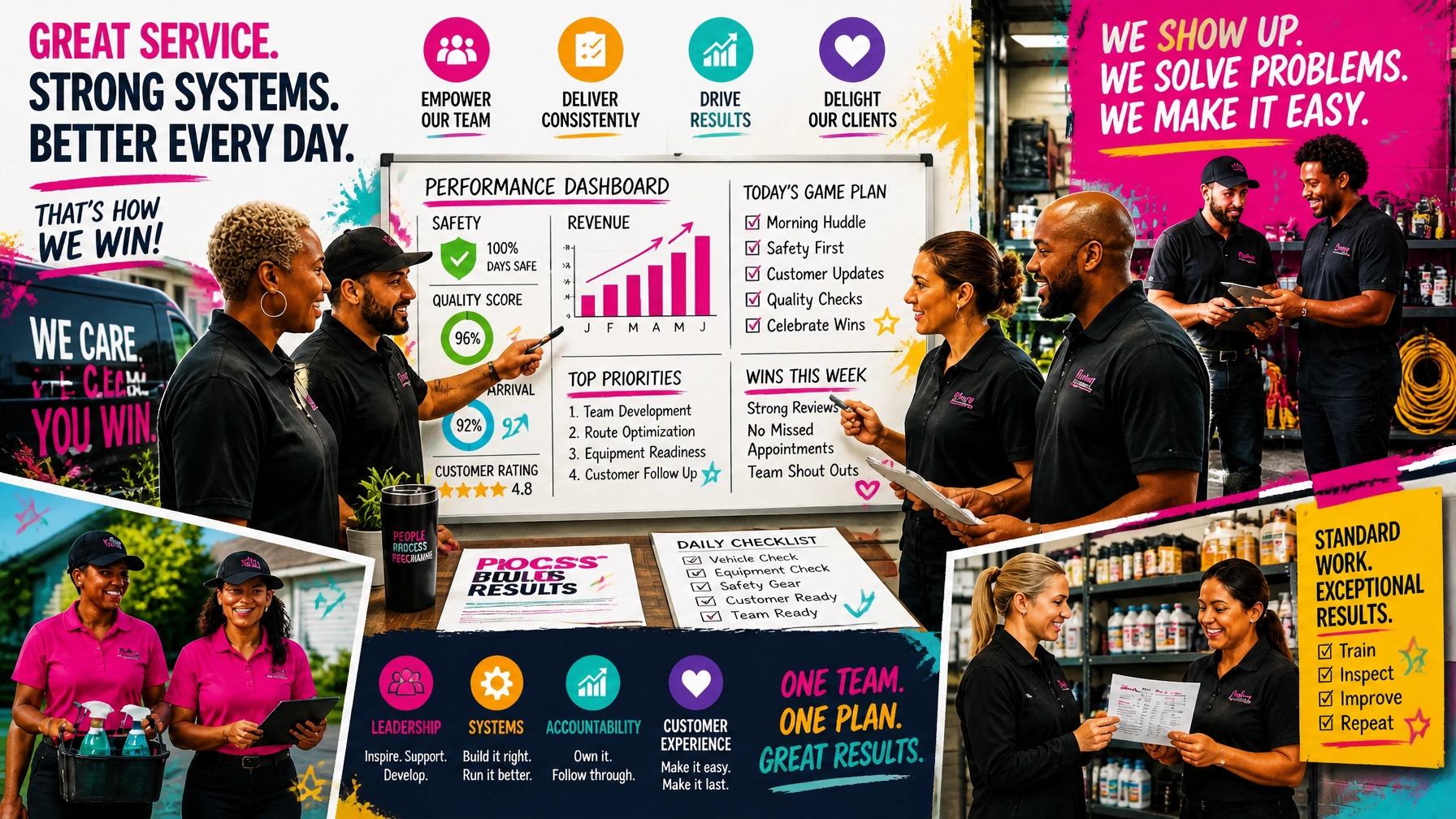
If the business depends on your personal memory or personality to run, it won't scale. We emphasize operational excellence: the creation of SOPs and training rhythms that make the business "inspectable." You should be able to look at a dashboard on your phone and know exactly how your Frisco location is performing compared to your Plano location.
3. Shared Resources
The real profit in multi-unit ownership comes from "clustering." When you own multiple units in a market like Dallas, you can share a regional manager, flex your staff between stores during peak hours, and dominate local search rankings with a single marketing budget.
The Need for Clarity Over Sales
The franchise world is full of "opportunities" and sales pitches. But for a professional with a high-pressure career and a family, a bad investment is more than just a financial loss: it’s a massive drain on your most precious resource: time.
This is where franchise advisory services become essential. Our job at El Jefe Enterprises is to act as your filter. We help you slow down. We ask the hard questions:
- Does this model's labor requirement match your current schedule?
- Are the "pro forma" numbers realistic once you add the cost of a high-quality manager?
- Is the territory you’re looking at actually capable of supporting three to five units?
We believe business ownership should be evaluated through fit, not excitement alone. Excitement fades; a well-structured system lasts.

Moving Forward with Confidence
If you are currently in a high-income role but feel the need to build something that isn't dependent on your daily presence, multi-unit franchising is a viable, proven strategy. It allows you to stay in your career while building a diversified asset that grows in value every year.
The goal is not to work more. The goal is to own more of your time and your future.
At El Jefe Enterprises, we specialize in helping professionals navigate this transition. We provide the structure and the operational insight so you can move forward with clear, confident decisions.
If you are ready to explore how a multi-unit portfolio could fit into your current lifestyle, let’s start by getting clear on your goals.

Let’s talk about your next move
No pressure and no obligation. The goal of the first conversation is simple: clarity.
Book a callRelated reading

Is a Franchise Consultant Really Free? How It Works in Atlanta
by Johnny Tellez | Oct 26, 2026
Short answer: yes. A good franchise consultant costs you nothing. That's usually the moment people get suspicious. Fair enough. If you're thinking about buying a franchise in Atlanta, you should know exactly who's paying, why, and what that means for the advice you get…
Read more
Business Coaching in Atlanta: 7 Signs Your Small Business Is Ready for a Coach
by Johnny Tellez | Oct 26, 2026
Atlanta is one of the best places in the country to own a small business. From Buckhead to Decatur, from Marietta to the Westside, owners are opening shops, service companies and franchises every week. But building something and running it well are two different jobs. A lot of good owners hit a point where hard work alone stops…
Read more
Is Your Business Stuck? Here’s How the Five Pillars of Operational Clarity Diagnose the Real Problem
by Johnny Tellez | Oct 1, 2026
Most business owners don’t realize they are stuck until they are exhausted. You started with a vision. You had the energy. But somewhere between opening the doors and reaching your first major milestone, the "grind" became the "norm." You find yourself putting out the same fires every Tuesday, answering the same questions from your team…
Read more