The Ultimate Guide to 2026 Funding: How to Buy a Franchise as SBA Lending Changes
by Johnny Tellez | Jun 9, 2026

For years, getting an SBA loan for a franchise felt like a math problem. You handed over your tax returns, the bank plugged your numbers into an algorithm, and out popped a FICO SBSS score. If the score was high enough, you were in. If not, you were out.
But as we move into 2026, the game has fundamentally changed. The SBA has officially moved away from the automated, "black box" style of scoring and is returning to something much more traditional: Narrative Underwriting.
This shift is a double-edged sword. On one hand, it means you are no longer just a number on a spreadsheet. On the other, it means you have to work much harder to prove that you, your chosen brand, and your business plan actually make sense. At El Jefe Enterprises, we’ve always believed in clarity over sales pressure, and in 2026, clarity is exactly what your lender is going to demand.
Here is what you need to know to navigate the new landscape of franchise funding.
The Death of the Algorithm: FICO SBSS Sunsets
Effective March 1, 2026, the SBA has sunsetted the FICO SBSS scoring for 7(a) small loans. For the last decade, this score was the primary gatekeeper for loans under $350,000.
Now, lenders are required to use "generally accepted industry credit analysis." In plain English? They are going back to reading. They are going to look at your Debt Service Coverage Ratio (DSCR), your global cash flow, and your personal character.

This change means your Business Plan and your Franchise Validation process are no longer just "hoops to jump through." They are the foundation of your loan approval. Lenders will be looking for a DSCR of at least 1.1:1, and they will be scrutinizing the brand’s history far more than before. If you are looking at a brand with a high failure rate or poor unit-level economics, an algorithm won't save you anymore. You’ll have to explain why your location will be different.
The $10 Million Opportunity: Decoupling Loan Limits
One of the most significant shifts for 2026 is the strategic decoupling of 7(a) and 504 loan limits. Previously, these programs were often viewed in tandem, which could limit a borrower’s total exposure.
Now, sophisticated buyers are looking at a total aggregate of up to $10 million. By utilizing a $5 million 7(a) loan for operations and working capital, and a $5 million 504 loan for real estate and heavy equipment, larger-scale franchise projects are becoming more accessible.
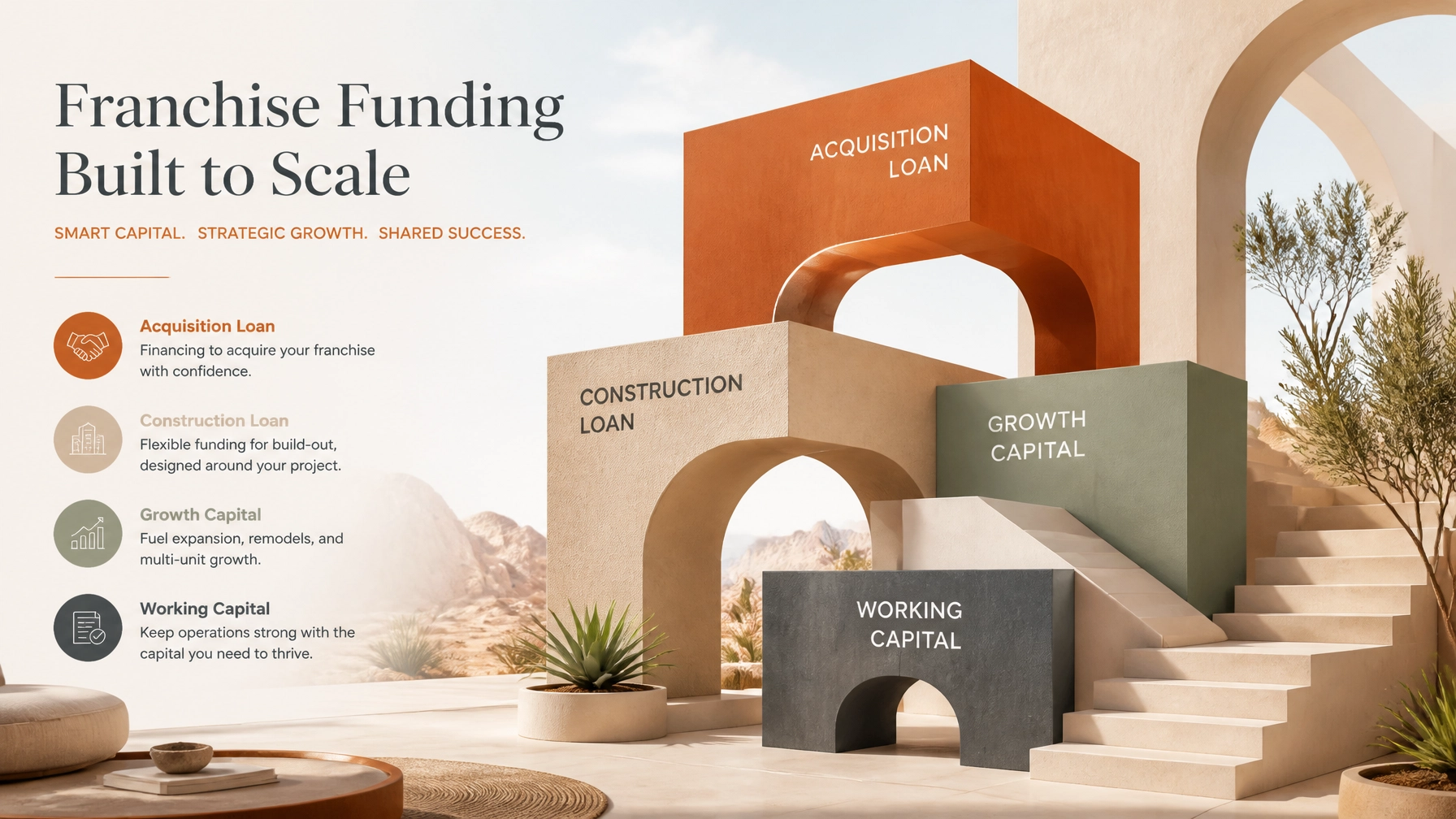
This is a massive win for multi-unit operators or those looking at high-cost service brands. However, it requires a much more complex financial structure. You aren't just buying a job; you’re building an enterprise. At this level, the SBA is looking for a "professional" operator: someone who understands that growth should not depend only on the owner’s memory or personality, but on repeatable business systems.
The 10% Rule: Equity is Non-Negotiable
If you were hoping for a "zero-down" path into business ownership, 2026 is going to be a reality check. The SBA has tightened its stance on "skin in the game." For most franchise startups and change-of-ownership deals (resales), a mandatory 10% equity injection is the standard.
Lenders want to see that you are personally invested in the outcome. This 10% cannot usually be "borrowed" in a way that adds more debt to the business; it needs to be true equity: cash, 401(k) rollovers (ROBS), or home equity that isn't cross-collateralized by the business.
Furthermore, citizenship and residency requirements have become more stringent. If you own 20% or more of the business, you must be a U.S. citizen or a Lawful Permanent Resident (Green Card holder) with a clear, documented path to staying in the country. The "gray areas" of lending to non-citizens have largely been closed off to ensure long-term stability in the SBA portfolio.
The $50,000 Collateral Threshold
Lenders have always loved collateral, but the 2026 guidelines have added a new layer of scrutiny for working capital. For any loan greater than $50,000 where more than half the money is going toward "working capital" (the cash you use to keep the lights on while you ramp up), lenders now have to document exactly why you need that much.

This is where many first-time buyers get stuck. They ask for a "buffer" without having a line-item budget to back it up. In the new lending environment, "just in case" isn't a valid business reason. You need a roadmap. You need to show how every dollar of that $50k+ will be deployed to create momentum, whether that's through marketing, initial staffing, or inventory.
Brand Reputation: The SBA Directory and Default Rates
In the past, as long as a brand was on the "SBA Franchise Directory," you were generally safe to proceed. In 2026, the Directory is just the starting point.
Lenders are now placing a massive emphasis on Brand Default Rates. They are looking at data from providers like FRANdata to see how many people in that specific system have failed to pay back their loans in the last five years.
If you pick a brand that looks flashy in the marketing materials but has a 15% default rate, you are going to find it nearly impossible to get a loan. This is why we tell our clients that Franchise Ownership should be evaluated through fit and performance, not excitement alone.
Moving Forward with Confidence
The 2026 funding environment is not "harder": it’s just more intentional. The SBA is trying to weed out people who are buying a franchise as a "get rich quick" scheme and supporting those who treat it as a disciplined professional move.
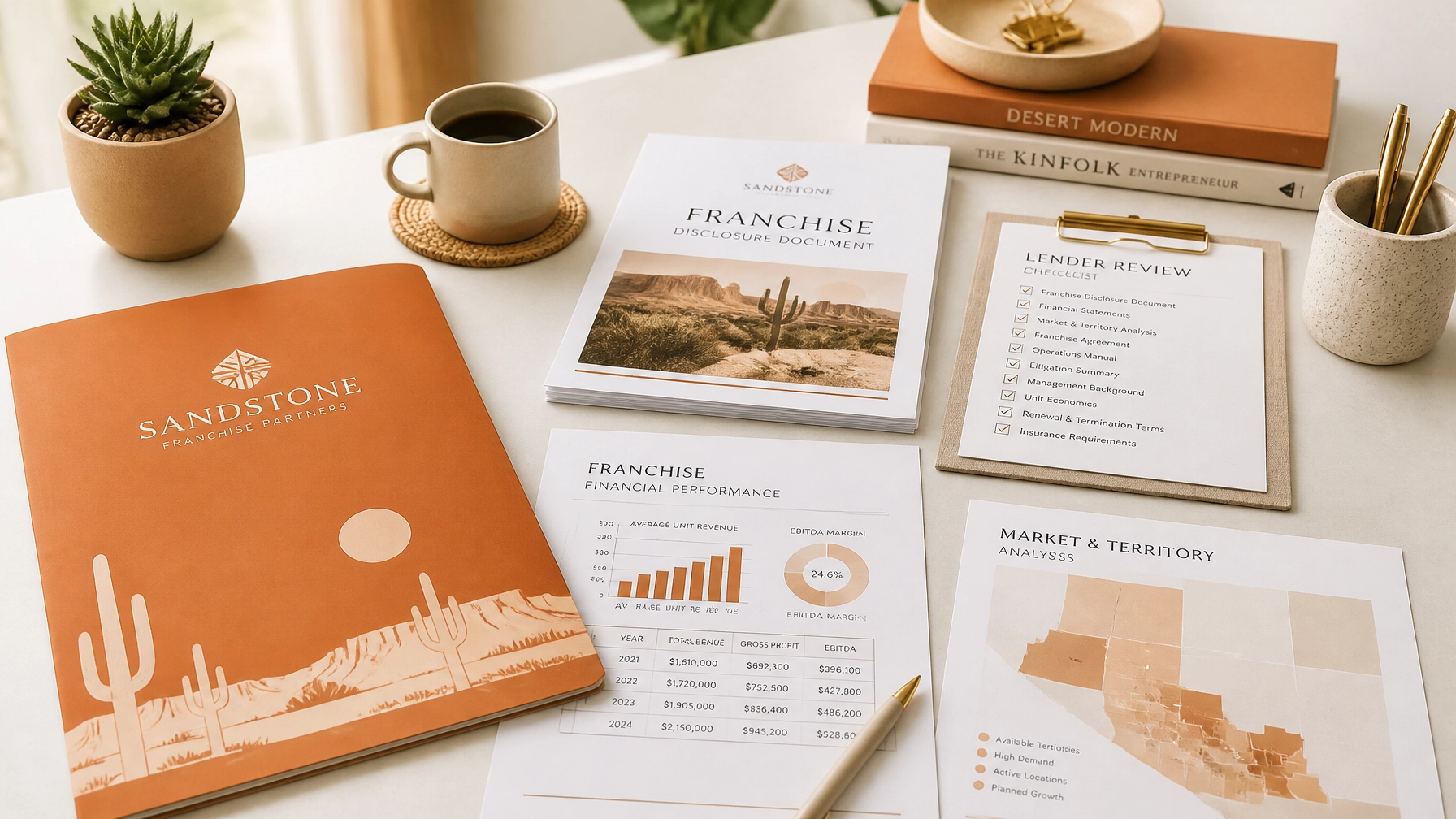
If you are exploring franchise ownership, start by getting clear on the numbers. Don't wait for a lender to tell you that your plan is weak. Build your systems, document your processes, and understand your capital requirements before you ever sign an FDD.
At El Jefe Enterprises, we help you move from chaos to clarity. We don't just look at the marketing brochures; we look at the operational reality. We help you evaluate the brand’s standing, your personal readiness, and the financial structure needed to not just survive, but to scale.
The goal is not more complexity. The goal is better rhythm, clearer structure, and a funding path that lets you sleep at night.
Ready to see if your goals match the 2026 lending reality? Let’s talk about a strategic roadmap that puts your best interests first.
Let’s talk about your next move
No pressure and no obligation. The goal of the first conversation is simple: clarity.
Book a callRelated reading

Is a Franchise Consultant Really Free? How It Works in Atlanta
by Johnny Tellez | Oct 26, 2026
Short answer: yes. A good franchise consultant costs you nothing. That's usually the moment people get suspicious. Fair enough. If you're thinking about buying a franchise in Atlanta, you should know exactly who's paying, why, and what that means for the advice you get…
Read more
Business Coaching in Atlanta: 7 Signs Your Small Business Is Ready for a Coach
by Johnny Tellez | Oct 26, 2026
Atlanta is one of the best places in the country to own a small business. From Buckhead to Decatur, from Marietta to the Westside, owners are opening shops, service companies and franchises every week. But building something and running it well are two different jobs. A lot of good owners hit a point where hard work alone stops…
Read more
Is Your Business Stuck? Here’s How the Five Pillars of Operational Clarity Diagnose the Real Problem
by Johnny Tellez | Oct 1, 2026
Most business owners don’t realize they are stuck until they are exhausted. You started with a vision. You had the energy. But somewhere between opening the doors and reaching your first major milestone, the "grind" became the "norm." You find yourself putting out the same fires every Tuesday, answering the same questions from your team…
Read more