
Top 10 Metrics to Monitor in Your Daily Franchise Financial Review
by Johnny Tellez | Jun 27, 2026

In the world of franchising and multi-unit operations, many owners treat their monthly Profit & Loss (P&L) statement like a religious text. They wait for it to arrive, study it with intensity, and then react to what happened thirty days ago.
But if you’ve spent twenty years in operations like I have: leading systems at brands like Cici’s, Focus Brands, or Blaze Pizza: you know that a monthly P&L is essentially an autopsy. It tells you exactly why the patient died, but it’s too late to save them.
To move from Founder-led chaos to System-led success, you have to stop managing in the rearview mirror. True operational clarity comes from knowing exactly where you stand every single morning. When you transition from a "let’s see how we did" mindset to a "here is where we are" daily rhythm, you regain control. You stop guessing and start leading.
Monitoring these ten daily metrics isn't about micromanagement; it’s about visibility. It’s about ensuring that your small business growth strategy is actually working on the ground level.
1. Daily Net Sales vs. Forecast
Total sales is the headline, but it’s meaningless without context. You need to know how today’s sales compare to what you expected to do. Did you beat the forecast? If so, did you have the labor to support it? If you missed it, was it a weather event, a local competitor’s promotion, or a drop in execution? Tracking net sales daily allows you to see trends as they happen, not weeks after they’ve cooled off.
2. Same-Store Sales Comps (Last Week & Last Year)
A franchise expert advice staple is the "comp." Comparing today’s sales to the same day last week and the same day last year gives you a true growth trajectory. If you are consistently down 5% compared to last year, you don’t wait for the end of the month to troubleshoot. You look at your Promotion and People pillars immediately.
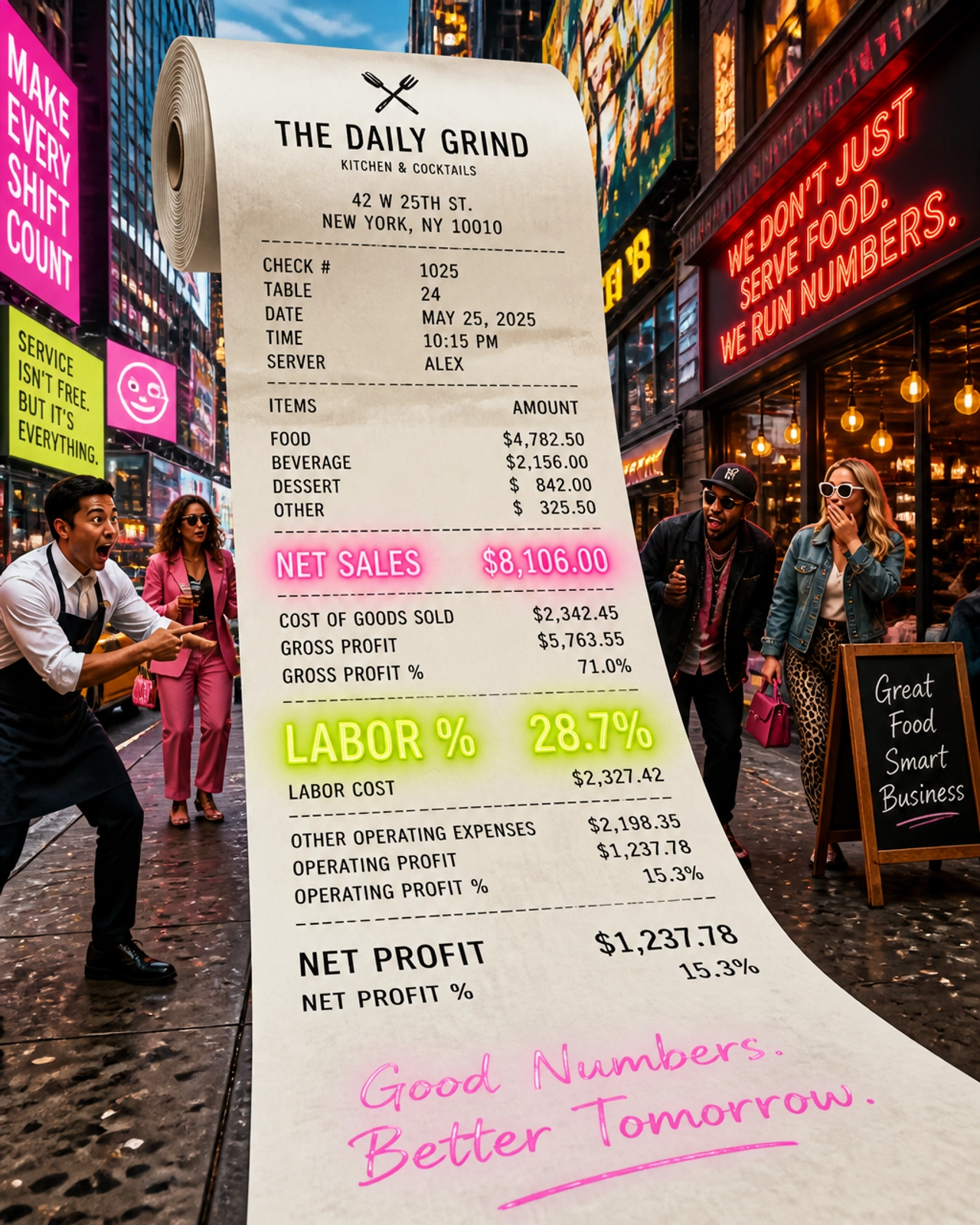
3. Labor Cost Percentage (Actual vs. Budget)
Labor is usually your largest controllable expense. In a fast-paced franchise environment, labor can "leak" through poor scheduling, early clock-ins, or late clock-outs. By reviewing your daily labor percentage against your budget, you can catch a "heavy" week on Tuesday and adjust the schedule for Friday. This is how you protect your margins in real-time.
4. Sales per Labor Hour (SPLH)
While labor percentage tells you the cost, SPLH tells you the efficiency. If you have a high labor percentage but a high SPLH, you might just have a pricing or COGS issue. But if your SPLH is low, it means you have too many people standing around for the volume of business you’re doing. This metric is a key part of any franchise ownership guide for those looking to scale effectively.
5. Prime Cost (The "Big Number")
Prime Cost is the combination of your Total Labor and your Cost of Goods Sold (COGS). In the restaurant and retail world, this is the heartbeat of your business. Ideally, this number should stay within a specific range (often 55% to 65% depending on the brand). If you know your daily prime cost, you know your daily profitability. It’s the ultimate metric for scaling a small business without losing your shirt.
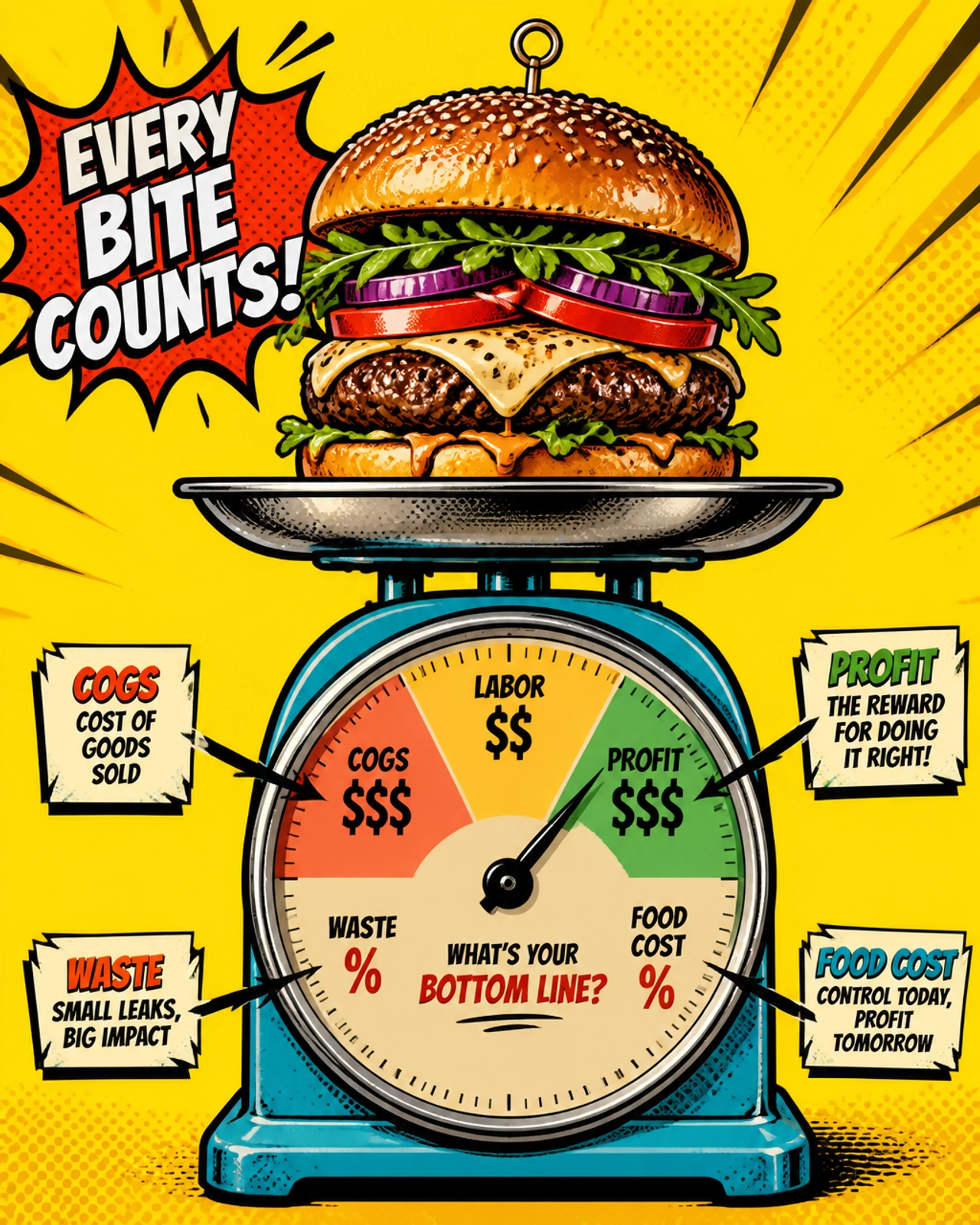
6. COGS / Theoretical vs. Actual Waste
You don’t need a full inventory count every day, but you should track your "Key Items." If you’re a pizza franchise, you track cheese and pepperoni. If you’re a gym, you track retail supplements. If the "Theoretical Usage" (what the POS says you should have used) doesn’t match the "Actual Usage," you have a waste, portioning, or theft problem. Catching this daily prevents a small gap from becoming a canyon by month-end.
7. Average Ticket (Transaction Size)
Is your team suggestive selling? Are your promotions driving higher-value customers or just discount-seekers? Monitoring average ticket size daily helps you see if your training on the Process pillar is sticking. A $0.50 increase in average ticket across thousands of transactions is the difference between surviving and thriving.
8. Voids, Comps, and Discounts
High levels of voids and discounts are red flags. Sometimes they indicate a training issue (mistakes in the kitchen), and other times they indicate "leakage" (theft). As a franchise consultant, I always look at this first when a business owner says they have "sales but no cash." Monitoring this daily builds a culture of accountability.
9. Speed of Service / Throughput
In the QSR and service world, speed equals money. If your "Ticket Time" or "Drive-Thru Time" increases, your transaction count will eventually decrease. Customers value their time as much as their money. Tracking speed daily ensures that your operational systems are holding up under pressure. It’s a leading indicator of future sales.

10. Cash Over/Short
This is the simplest form of daily due diligence. Does the money in the drawer match the money in the system? Consistent "shorts" are not just a financial loss; they are a sign of a broken Process or a lack of leadership. System-led businesses have tight cash handling rhythms that happen every single day.
From Chaos to Clarity: The Profit Pillar
At El Jefe Enterprises, we focus on the Five Pillars of Operational Clarity: People, Profit, Process, Promotion, and Priority. These daily metrics live squarely within the Profit pillar, but they are supported by the others.
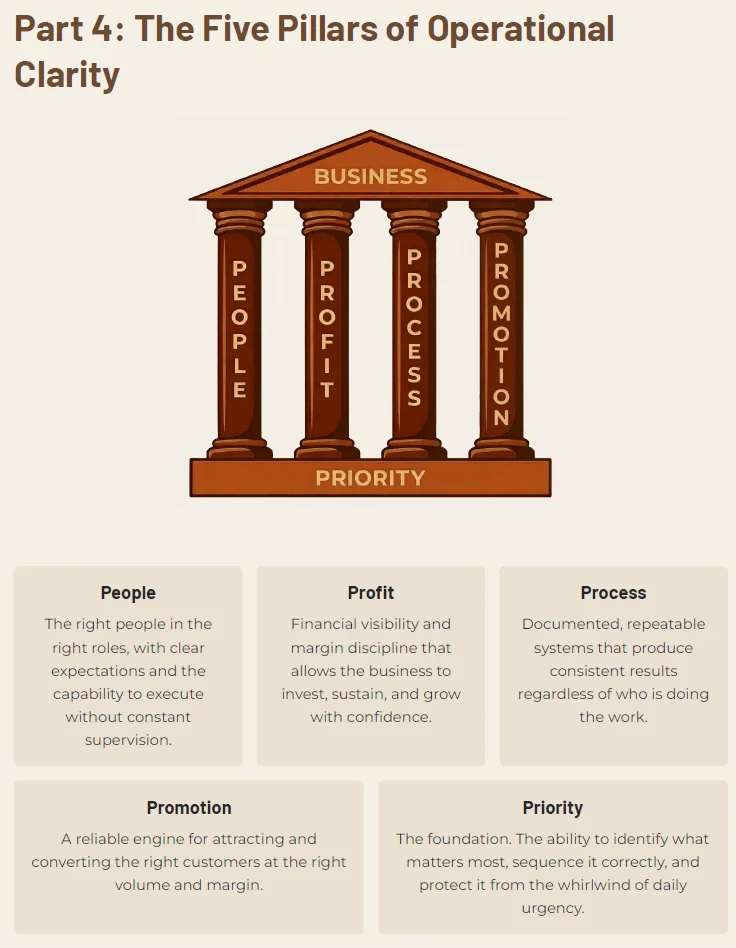
When you monitor these metrics, you aren't just looking at numbers; you are looking at the health of your systems.
- If labor is high, you may have a People or training issue.
- If waste is high, your Process for portioning might be broken.
- If sales are low, your Promotion strategy needs a pivot.
The goal isn't to spend four hours a day in a spreadsheet. The goal is to spend fifteen minutes every morning reviewing a "Flash Report" so you can spend the rest of your day focused on Priority: the high-level work that actually grows the business.
Moving Toward a System-Led Business
If you are currently exploring the best franchises to own or wondering how to buy a franchise, remember that the most successful owners are those who value data over "gut feeling."
Franchising offers a roadmap, but you still have to drive the car. Part of that "driving" is checking your dashboard. If your business currently feels like a "Whirlwind" of chaos where you are the only one who knows what’s going on, it’s time to build the systems that allow the business to run without your constant heroics.
Franchise advisory services and business coaching are about more than just finding a brand; they are about building the operational muscles to run that brand profitably.
Final Takeaway
Don't wait for the end of the month to find out you lost money. Start small. Pick three of these metrics: maybe Sales, Labor %, and Prime Cost: and commit to reviewing them every single morning.
When you have clarity, you have confidence. And when you have confidence, you can make the bold decisions required to scale.
If your business is growing but the work still lives mostly in your head, it may be time to start documenting the systems that make the business run. At El Jefe Enterprises, we help owners simplify complexity so they can focus on growth, not just survival. Let's get clear on your next step.
Let’s talk about your next move
No pressure and no obligation. The goal of the first conversation is simple: clarity.
Book a callRelated reading

Is a Franchise Consultant Really Free? How It Works in Atlanta
by Johnny Tellez | Oct 26, 2026
Short answer: yes. A good franchise consultant costs you nothing. That's usually the moment people get suspicious. Fair enough. If you're thinking about buying a franchise in Atlanta, you should know exactly who's paying, why, and what that means for the advice you get…
Read more
Business Coaching in Atlanta: 7 Signs Your Small Business Is Ready for a Coach
by Johnny Tellez | Oct 26, 2026
Atlanta is one of the best places in the country to own a small business. From Buckhead to Decatur, from Marietta to the Westside, owners are opening shops, service companies and franchises every week. But building something and running it well are two different jobs. A lot of good owners hit a point where hard work alone stops…
Read more
Is Your Business Stuck? Here’s How the Five Pillars of Operational Clarity Diagnose the Real Problem
by Johnny Tellez | Oct 1, 2026
Most business owners don’t realize they are stuck until they are exhausted. You started with a vision. You had the energy. But somewhere between opening the doors and reaching your first major milestone, the "grind" became the "norm." You find yourself putting out the same fires every Tuesday, answering the same questions from your team…
Read more