
Top 10 Metrics to Monitor in Your Daily Franchise Financial Review (Beyond Revenue)
by Johnny Tellez | Jul 9, 2026

Most franchise owners start their day by looking at one number: Revenue.
It’s the number that makes you feel good when it’s up and keeps you awake when it’s down. But after 20-plus years in senior operations with brands like Blaze Pizza and Focus Brands, I can tell you this: Revenue is often a vanity metric. It tells you how much money came through the door, but it tells you absolutely nothing about how much of that money you actually get to keep.
I’ve seen $2 million-a-year units that were technically bankrupt because their middle-of-the-page numbers were a disaster. On the flip side, I’ve seen $800,000 units that were cash-flow machines because the owner understood the Profit Pillar of operational clarity.
If you want to move from being a "job owner" to a "business owner," you have to stop managing by the bank balance and start managing by the metrics. Here are the top 10 metrics you should be reviewing every single day: metrics that provide a much clearer picture than top-line sales ever will.
1. Sales per Labor Hour (SPLH)
While many owners focus on labor as a percentage of sales, Sales per Labor Hour is a much more practical daily diagnostic. It measures the rhythm and productivity of your team.
If your SPLH is consistently low, you’re likely overstaffed or your team isn't moving with intentionality. If it’s too high, your guest experience is probably suffering because your staff is underwater. Finding that "sweet spot" is the key to balancing service quality with profitability.

2. Average Ticket / Check Size
Are you growing because you have more customers, or because you’re selling more to the customers you already have? Tracking your average ticket size tells you everything you need to know about your team’s ability to execute on the Promotion Pillar.
If your average check is slipping, it’s a training issue. Your team isn't upselling, or they’ve stopped suggesting the add-ons that drive margin. This is a daily opportunity to coach your team on how to provide more value to the guest while increasing the bottom line.
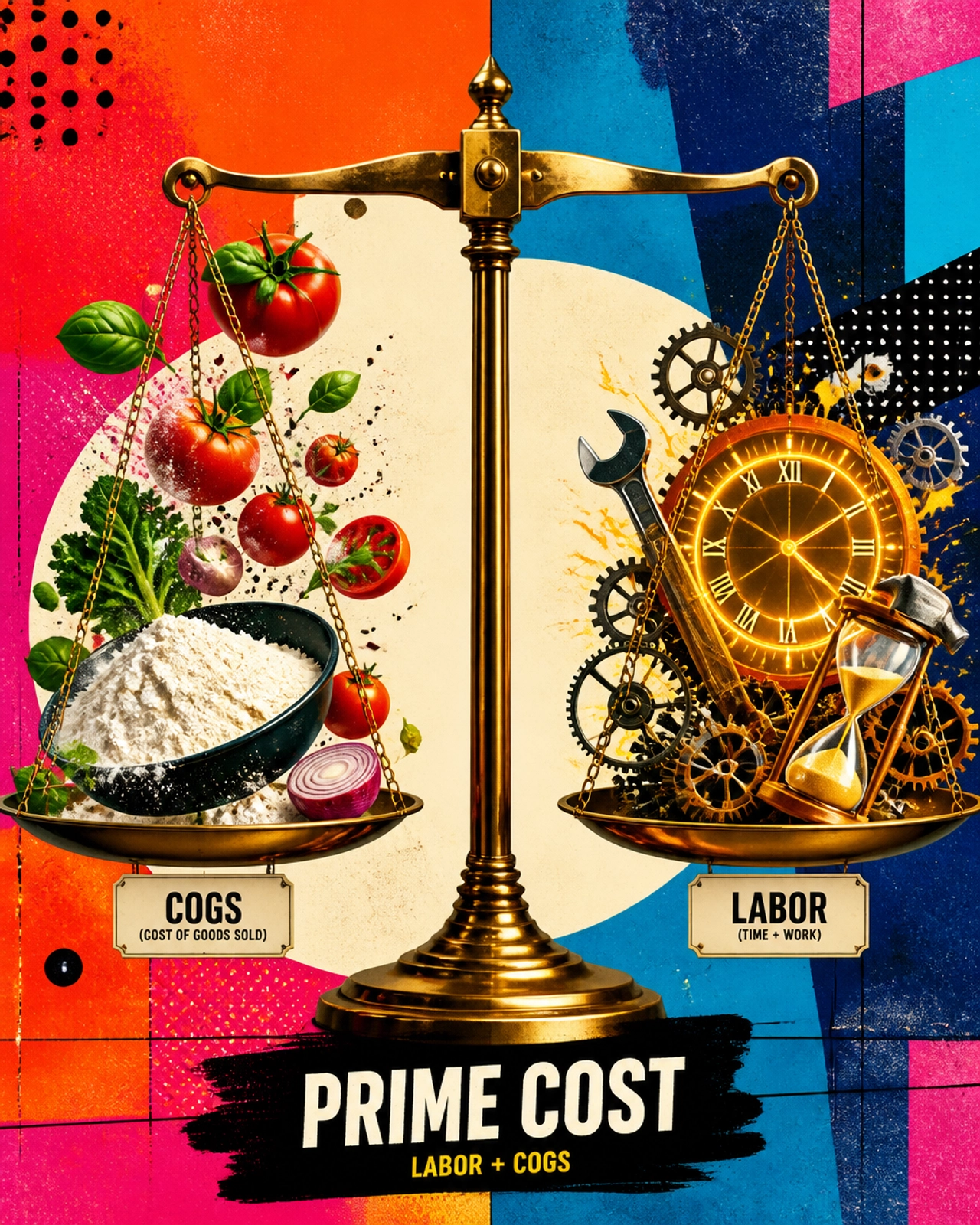
3. Daily Prime Cost (Labor + COGS)
In the world of franchise advisory services, we call this the "Big Two." Prime cost: the combination of your Cost of Goods Sold (COGS) and your Total Labor: should ideally sit between 55% and 65% for most QSR and retail concepts.
Reviewing this daily prevents "margin creep." If you wait until the end of the month to see that your food cost was 5% too high, you’ve already lost the money. By checking it daily, you can catch a broken freezer, a heavy-handed prep cook, or a scheduling error before it becomes an expensive habit.
4. Overtime Hours
Overtime is often the most preventable profit leak in a franchise. It usually doesn't happen because of a sudden rush; it happens because of poor operational systems or a lack of accountability in the schedule.
If you see overtime creeping in on a Tuesday, you have the rest of the week to adjust the schedule and fix it. If you wait until payroll is processed, you’re just writing a check for your own lack of oversight.
5. Discounts and Comps as % of Sales
A high percentage of discounts can be a red flag for two things: either your team is using "free food" to fix bad service (a Process Pillar issue), or there’s internal theft happening.
A healthy business uses promotions intentionally to drive traffic. An unhealthy one uses them as a crutch. If your discounts are consistently over 2-3% of sales without a major marketing campaign running, it’s time to dig into the "why."
6. Guest / Transaction Count Trends
Revenue can be inflated by price increases, but guest counts don't lie. Are people actually coming back?
If your revenue is up but your guest count is down, you’re essentially "cannibalizing" your future growth. As a franchise consultant, I always tell owners: you can't price-hike your way to long-term success. You need a steady, growing flow of humans through the door.
7. Inventory Variance (Theoretical vs. Actual)
You don't need to count every single item every day, but you should be "spot-counting" your top 5-10 high-value items (think proteins, cheese, or high-end retail products).
Variance is the difference between what your POS says you should have and what you actually have. High variance is a sign of waste, theft, or poor portion control. Catching this daily keeps your team honest and your margins protected.
8. Daily Operating Cash Flow
Cash is the oxygen of your business. You can be profitable on paper but still run out of cash if your timing is off.
Reviewing your daily cash position vs. upcoming obligations (rent, royalties, payroll) ensures you aren't surprised by a "dry" week. This is about moving from chaos to clarity in your financial life.

9. Customer Satisfaction / Feedback Scores
While not a "financial" metric in the traditional sense, your guest feedback is a leading indicator of future revenue.
A bad score today is a lost customer tomorrow. If you see a dip in your daily scores, look at your labor metrics or your prep lists. Usually, a drop in service is tied directly to a breakdown in one of the other pillars.
10. Progress Toward Daily Break-even
Every business has a "nut": the amount of money you need to make just to cover your fixed and variable costs for the day.
Do you know what your daily break-even number is? When you hit that number at 4:00 PM, every dollar you make for the rest of the night is actual profit. Managing with this goal in mind changes the energy of the entire team. It turns the day into a "win" or a "loss" based on actual sustainability, not just a random sales target.
Moving Beyond Guesswork
The goal of monitoring these metrics isn't to create more work for yourself. The goal is to create Clarity Over Sales Pressure.
When you understand these ten numbers, you stop being a victim of your own P&L. You start to see the levers you can pull to actually change the outcome of your business. This is the difference between an entrepreneur who is trapped in the day-to-day and a leader who is scaling a small business with precision.
If your business feels like a "black box" where money goes in and you're never quite sure what’s coming out, it’s time to look deeper. At El Jefe Enterprises, we help owners look past the surface-level marketing materials to see the real operational demands of their brands.
Whether you are performing due diligence on your first franchise or trying to fix the unit-level economics of your third, the data is your best friend.
The right next step is usually not more complexity. It is clearer structure.
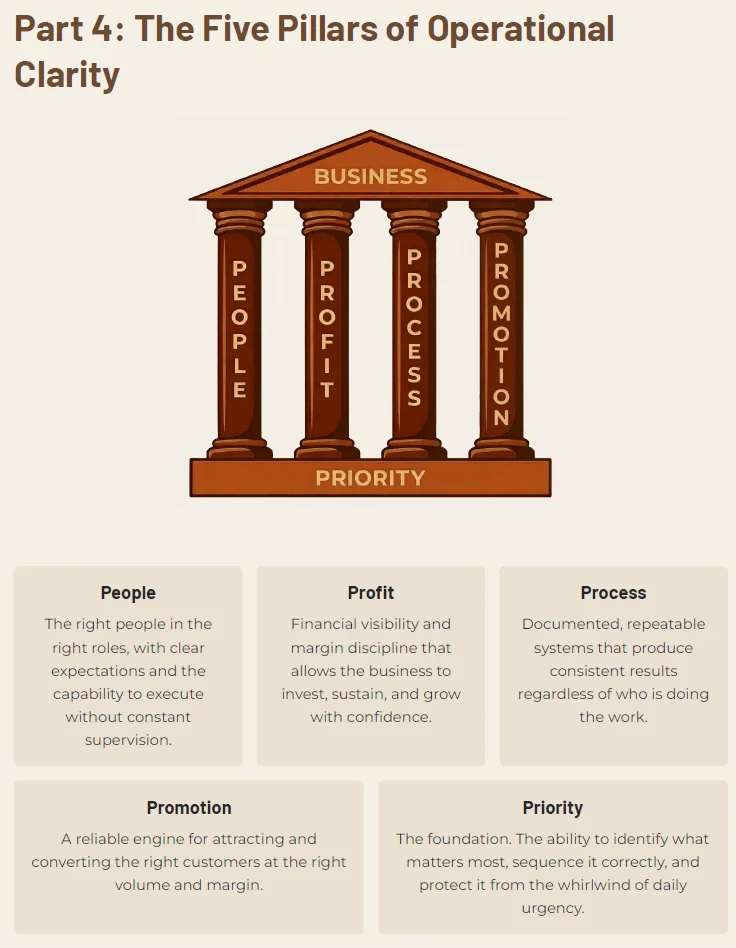
If you're ready to stop guessing and start growing, let's talk about how to bring the Five Pillars of Operational Clarity to your daily routine. We help you simplify the complexity so you can move forward with clear, confident decisions.
Let’s talk about your next move
No pressure and no obligation. The goal of the first conversation is simple: clarity.
Book a callRelated reading

Is a Franchise Consultant Really Free? How It Works in Atlanta
by Johnny Tellez | Oct 26, 2026
Short answer: yes. A good franchise consultant costs you nothing. That's usually the moment people get suspicious. Fair enough. If you're thinking about buying a franchise in Atlanta, you should know exactly who's paying, why, and what that means for the advice you get…
Read more
Business Coaching in Atlanta: 7 Signs Your Small Business Is Ready for a Coach
by Johnny Tellez | Oct 26, 2026
Atlanta is one of the best places in the country to own a small business. From Buckhead to Decatur, from Marietta to the Westside, owners are opening shops, service companies and franchises every week. But building something and running it well are two different jobs. A lot of good owners hit a point where hard work alone stops…
Read more
Is Your Business Stuck? Here’s How the Five Pillars of Operational Clarity Diagnose the Real Problem
by Johnny Tellez | Oct 1, 2026
Most business owners don’t realize they are stuck until they are exhausted. You started with a vision. You had the energy. But somewhere between opening the doors and reaching your first major milestone, the "grind" became the "norm." You find yourself putting out the same fires every Tuesday, answering the same questions from your team…
Read more